The Physical Body
The Physical Body is the dense material layer to the fourfold human form. Since it is comprised of Earth material, then it is related to the element of Earth, and to the Mineral Kingdom. The Physical Body is the form in which structural imbalances, such as deficiency and toxicity, in the expression of disease can be addressed.
Although Hair disorders can, and will, benefit from resolving structural imbalances in the Physical Body, just like with all chronic disease, the origin lies deeper than this layer. Furthermore, the imbalances that are theorized to cause Male Pattern Baldness (MPB), in particular, are off the mark. All conventional and most, if not all, holistic or alternative interventions target blood-flow, hormones, toxicity, or nutrient imbalances. However, the major structural issue in the expression of MPB is clearly skull shape, as shown below:
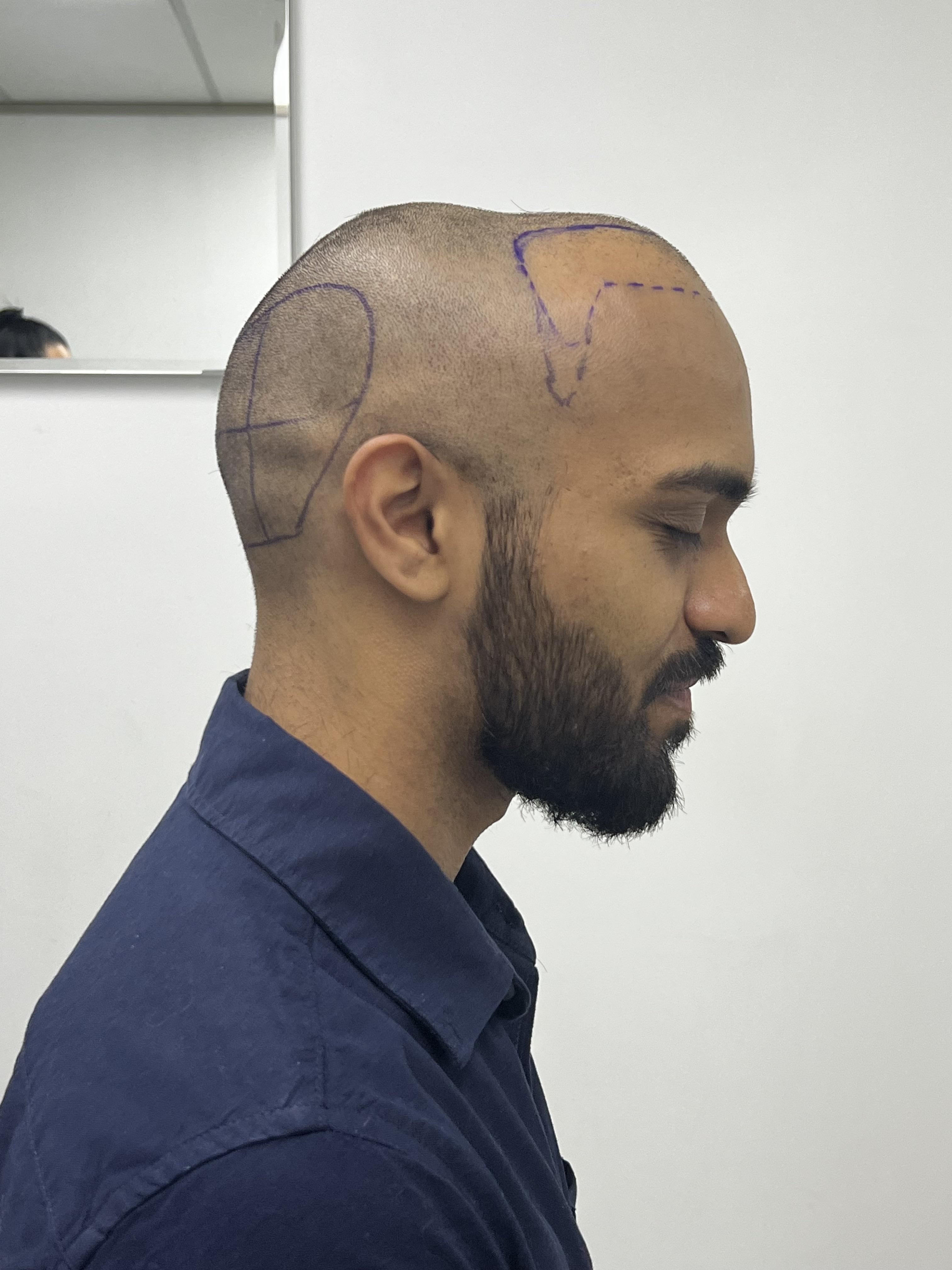
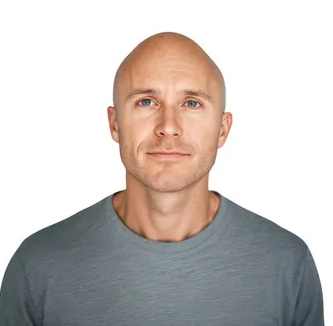
Any human with an MPB hair growth pattern has a grotesquely round bulgy skull, to some degree as shown above. For adult men, this additional skull growth occurs after puberty, and is the direct cause of the shift in the hair growth pattern. For more information as to how and why this occurs, read the home page.
This Physical Body page, rather, will focus on strategies to flatten skull, which may or may not be possible, but are a worthwhile endeavor. Theoretically, re-establishing the sharp angles, or contours, that defined the skull of every MPB sufferer in youth, would be the silver-bullet solution to MPB reversal and future immunity. See below for an example of a well-contoured juvenile skull:

Additionally, this page will provide nutritional strategies, based on Ayurveda and Traditional Chinese Medicine (TCM), aimed at increasing overall vitality and reducing toxic load. These measures primarily benefit the Kidney organ network, which is the organ network responsible for growing the Hair, according to TCM. Anything that improves Kidney function, therefore, will be reflected in the Hair, through color, luster, and even density improvements. However, such will not, necessarily, reverse or stop pattern loss. There are many people in modern living with weak and toxic Kidneys who have perfect hairlines. Nevertheless, it is worthwhile, even for overall health, to properly care for and nourish the Kidneys.
The last topic that is page will address is Ayurveda Hair Care. Maintaining healthy scalp conditions will help to reduce Heat, a culprit of both pattern and diffuse loss. Improving scalp conditions will not stop or prevent MPB alone. However, efforts in this respect will mitigate the MPB energetic pathology that is doing damage, improve the health of existing Hair, and can HELP to regrow lost Hair, with respect to certain herbal formulations utilized. Other applications of herbalism can be found on the Etheric Body page, and will be addressed in more detail there as it pertains to general energy manipulation strategies.
A summary of the interventions addressed on this page are listed below, and the details of each are the subject of the remainder of this page:
Skull Remodeling
Before discussing skull remodeling measures, it may be helpful to review the relationship between skull shape and MPB, for the purposes of identifying the areas where skull flattening measures are needed.
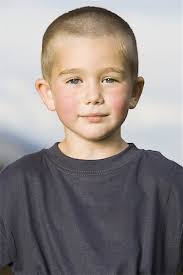
The contours of the skull are the borders that distinguish between its different parts. There is a natural contour that distinguishes the forehead from the top of the head, which is where our hairline grows, one that distinguishes the sides of the head from the top of the head, and one that distinguishes the forehead from the sides of the head. On a skull with good hair growth, these contours mark sharp changes in direction in the shape of the skull. Again, the skull of this boy, below, shows an example of very strong skull contours:
Notice how there is a sharp directional change at all of the contours of his skull. His forehead is flat, broad, vertical, and changes direction sharply at his hairline. The sides of his head are flat and vertical too, which creates a sharp contour at the border between his forehead and the side of the head, as well as a sharp directional change at the border between the side and the top of his skull.
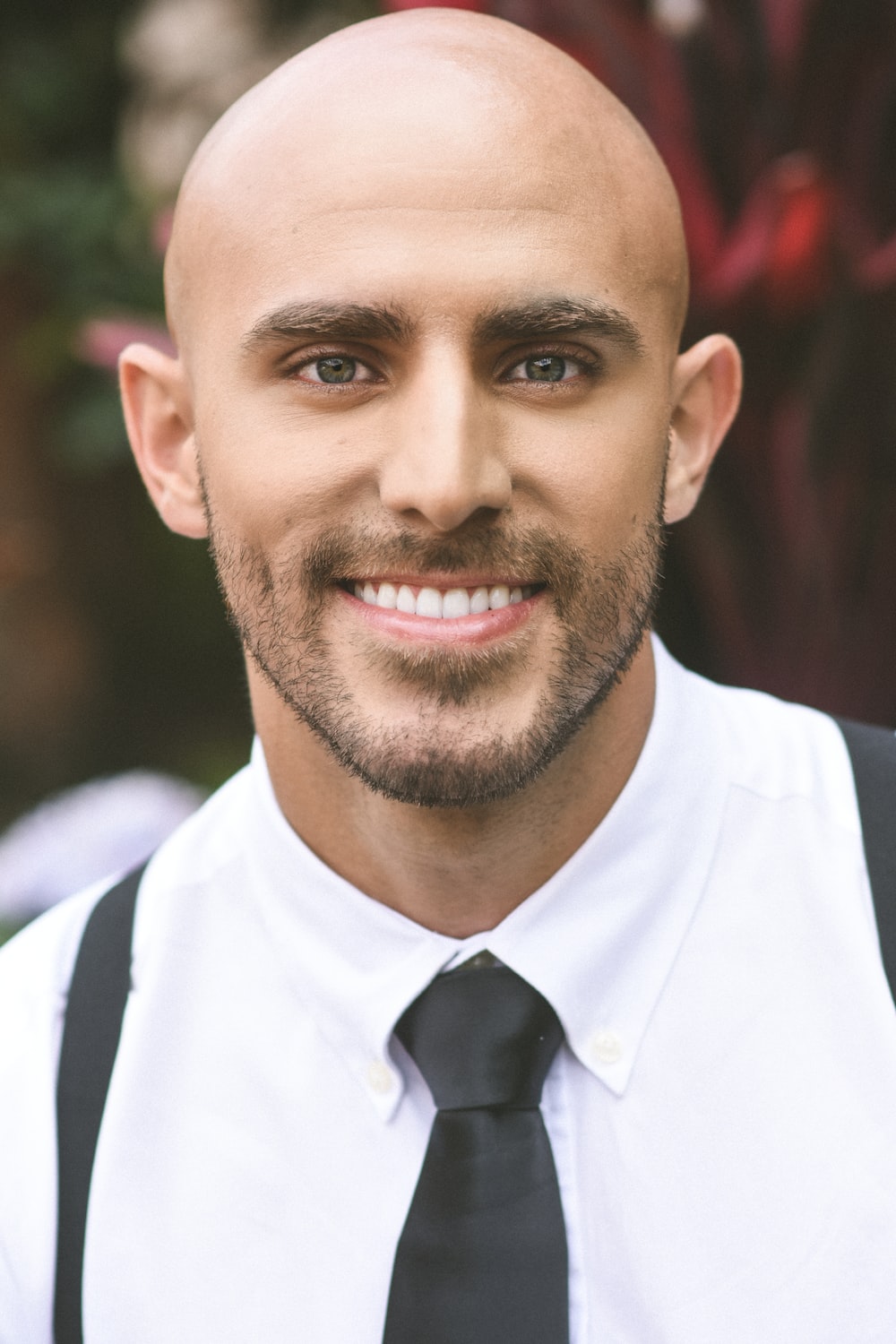
Hair likes to grow on a skull with sharp contours. All children have sharp contours to their skull, although maybe not as sharp as the boy pictured above. And men who maintain their sharp skull contours into adulthood have just as full of a head of hair as they did in youth, as shown below.

Men with MPB, on the other hand, suffer from severe erosion to the contours of their skull. On an MPB skull, the forehead rounds gradually to the sides of the head, and both the forehead and the sides round gradually to the crown of the head. The result is a very round, and spherical, or conical, skull shape with indistinguishable borders between the sides, top, and forehead of the skull, as shown below:
The overall rounding effect is due to a bulging thats occurs in a few different areas of the skull. The most prominent bulge that we can see from the front angle is at the crown. As the crown bulges up, the curvature from the sides of the head to the top of the head becomes more gradual, and the angle of the contour between the sides and top of the skull becomes less sharp. In some extreme examples, a conehead will form, as shown below:
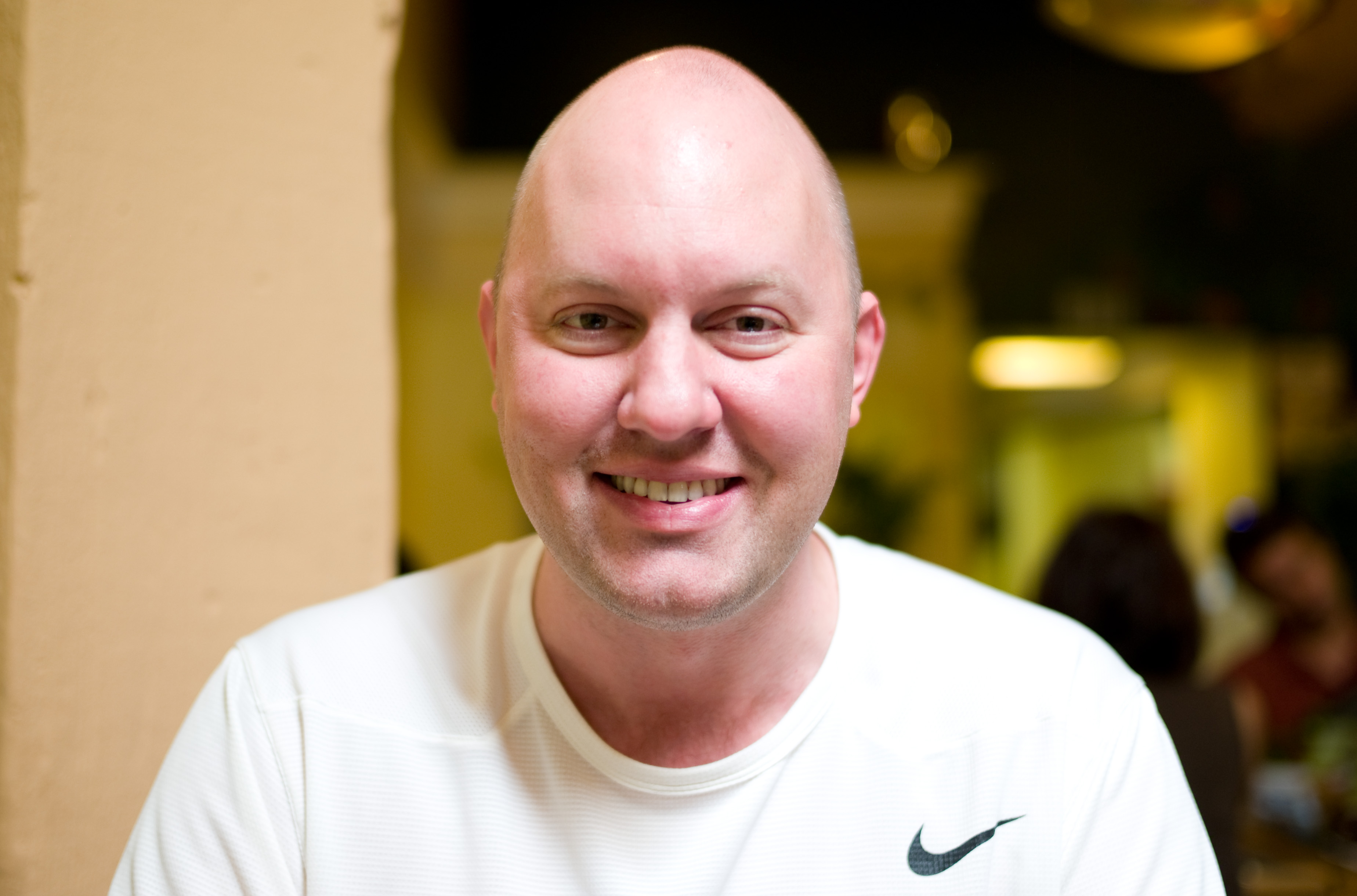
This what I classify as a "torpedo head." The sides of the head already start curving towards the crown down at the ears, which creates very gradual rounding and an indistinguishable border between the sides and crown of the head. It's what my daughter's head looked like right after she came out of her mom. If you had to push your way through a gigantic vaginal canal, to give an unnecessarily crude example, then this is a good skull shape to have. If you want hair, then not so much.
The bulging at the crown, in this extreme example, can also impact the contour at the hairline, which separates the forehead from the top of the skull. The reason being is that the more that the crown bulges up, the less sharply the change in direction is going to be at the hairline, causing a long and gradually sloping forehead, and non-existent hairline, as shown below:
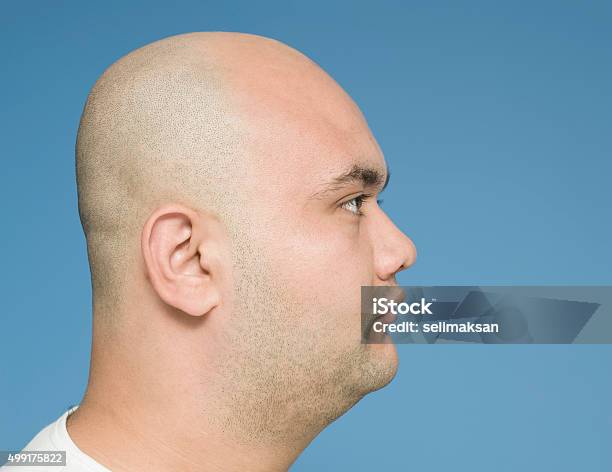
In this manner, an expanding crown can negatively impact both hair growth at the hairline as well as all over the top of the head. It creates the most severe hair loss cases, as a prominent bulge at the crown is apparent on MANY men with fully advanced MPB.
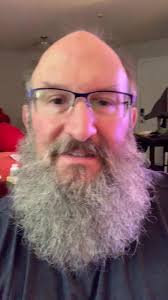

Bulging in the forehead creates an acute curvature in the shape of the forehead, which erodes the sharpness of the contours that distinguish the forehead from the sides and the top of the head. This will impact the shape and placement of the hairline. In extreme cases, the forehead bulge is so prominent that it completely obliterates the existence of the hairline, as shown below:
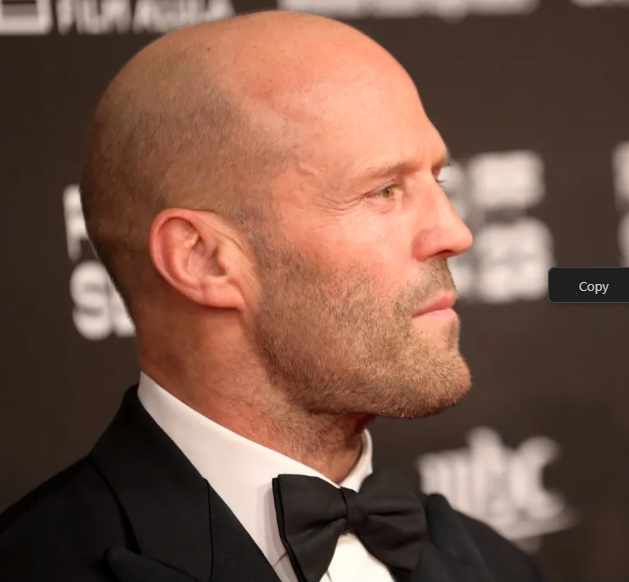
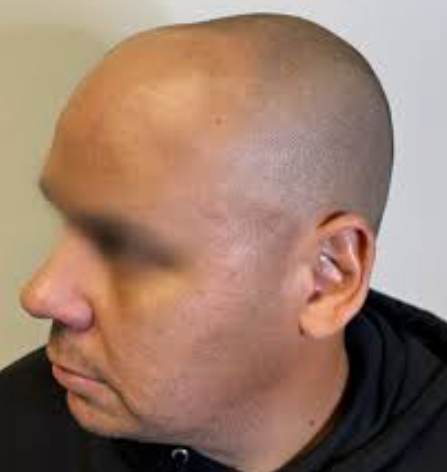
Notice how there is no visible contour that distinguishes the forehead from the top of the skull, due to the massive bubble forming on the forehead. The result of a complete lack of a distinct skull contour at the hairline is no hairline at all.
In cases where a hairline is still present, but receded, then the bulge in the forehead is more subtle. Nevertheless, it is possible to identify the bulging, from side and below angles, as shown below:
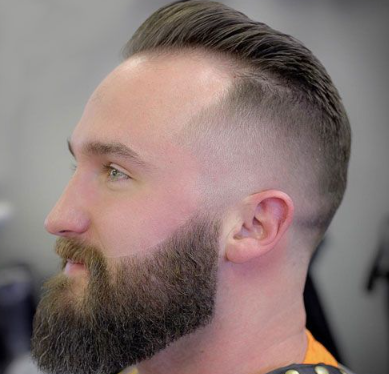
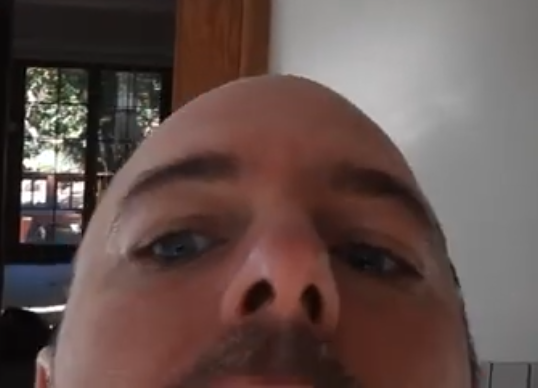
The guy on the left has a more subtle bulge in a profile view compared to that of the men pictured earlier. Nevertheless, it is creating enough curvature to impact his hair. The guy on the right is me. I have a similar receding hairline, and so we probably have a similar degree of bulging in the forehead. From this angle, the bulge in the forehead that is creating the acute curvature is more pronounced.
This bulge creates the lateral roundness at the top of the forehead, near, or even at, the hairline. This directly causes the m-shape pattern to form. The reason being is that the lateral roundness erodes the contours at the temples, which become steeply sloped and no longer identifiable as part of the flat top of the skull.
From a front view, the sloping in the temple region is more apparent. All men with a receding hairline have, to some degree, a temple region that is no longer sits as flat on the top of the skull as the area of the forelock, but rather slopes steeply down the face, like forehead. All of the men below demonstrate this skull feature:
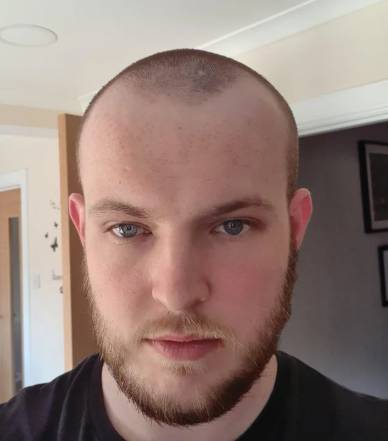
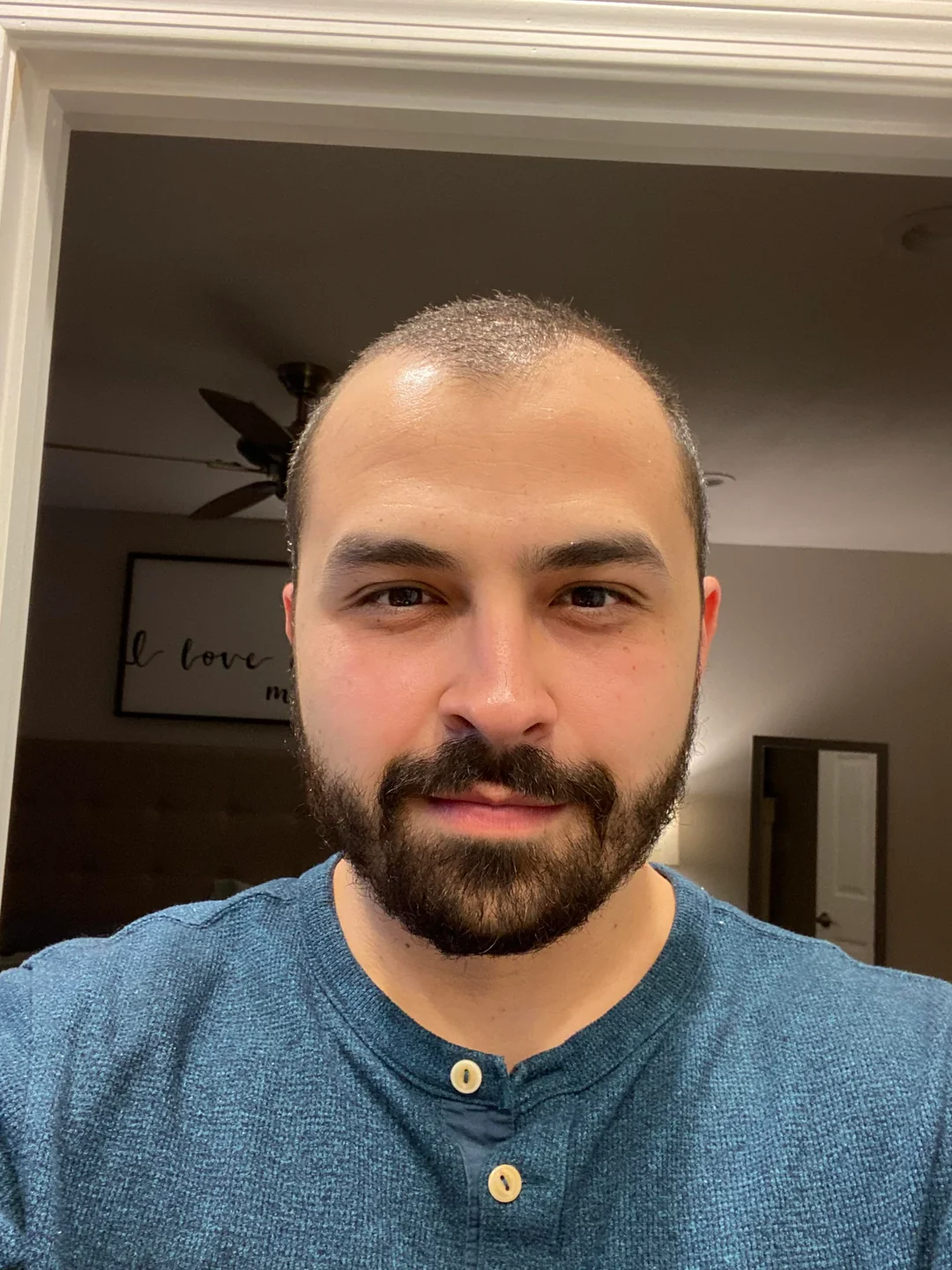
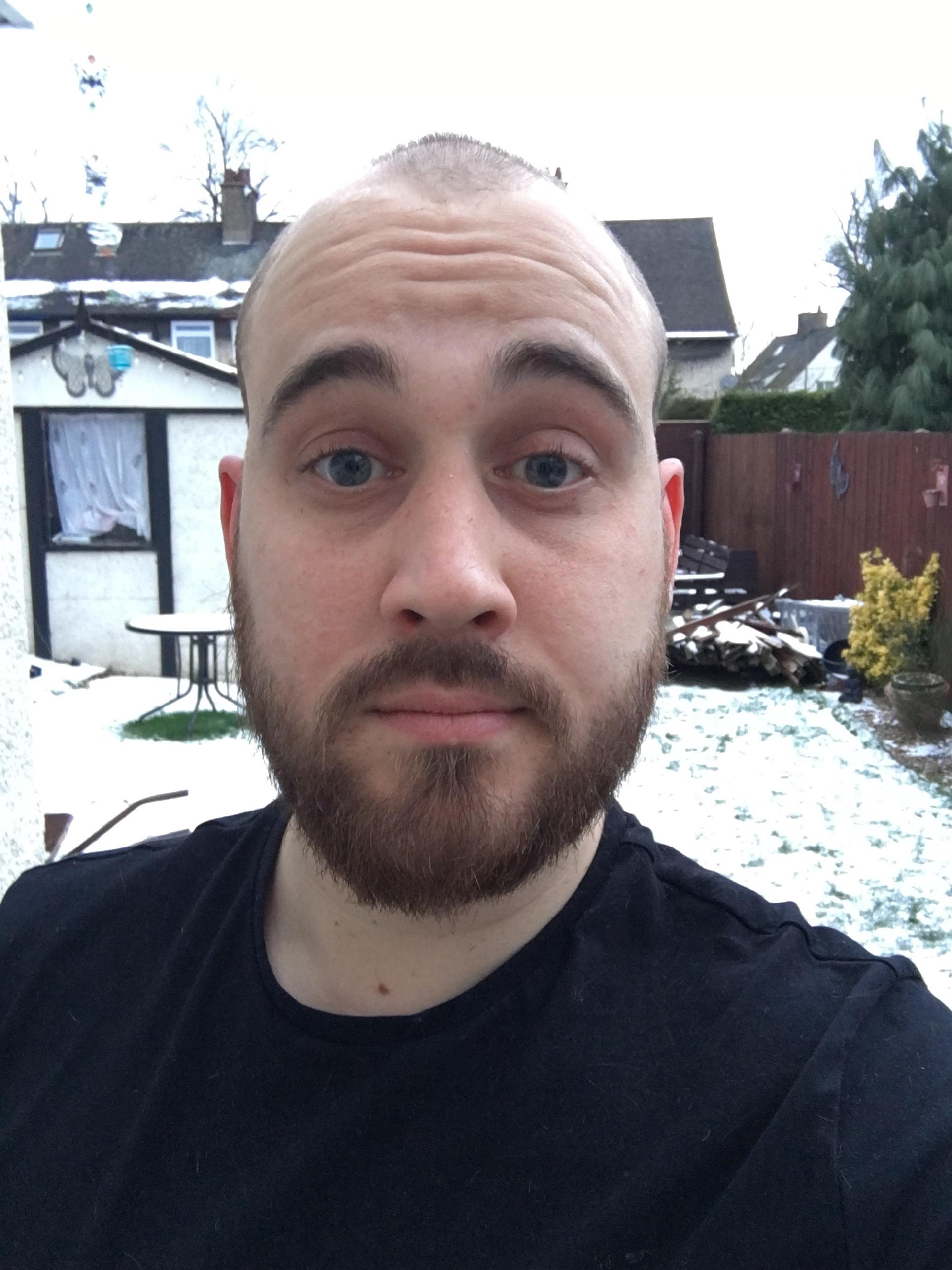
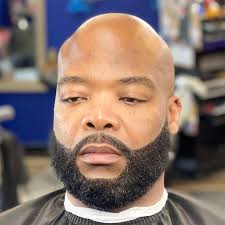
Notice how steeply the skull slopes down just beyond the edge of the hairlines. The temples are basically becoming part of the forehead. That's a problem because the human body, for whatever reason, doesn't grow hair on the forehead. This sloping occurs as a result of bulging in the forehead and even possibly bulging in the forelock region, which is quite evident in extreme examples, as shown below:
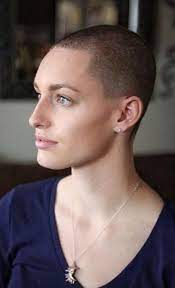
In addition, the forehead bulge can also exacerbate the longitudinal (up and down) curvature, which pushes the position of hairline back towards the crown. The reason being is that the top of the skull needs to be sufficiently parallel to ground before hair will actually grow on it. This feature is evident on people with no MPB as well. See below for examples of sloping foreheads on individuals with no MPB, and note how the hair does not grown until the frontal transitions to being NEARLY parallel to the ground.

The final area where bulging can occur is at the sides of the head. This occurs, usually, in conjunction with balding in the crown an forehead regions, the most common areas of expansion.
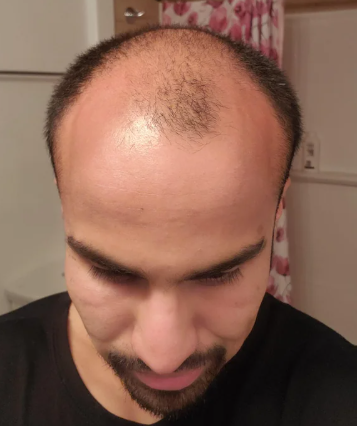
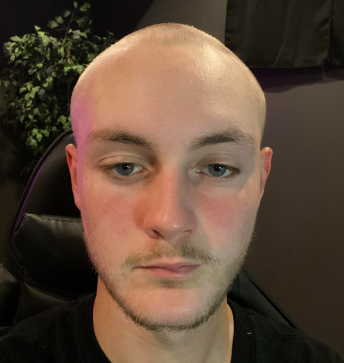
This expansion affects the contours that border the sides and the forehead, as well as the ones that border the sides and top of the head. The result is not much hair on the top of the head, and a severely thinned and receded hairline.
BLOOD-FLOW HYPOTHESIS
One theory as to why the rounded and bulging skull shape causes hair loss is that it obstructs the arterial network flow to the hair follicles. Here are some illustrations of the arterial network that deliver blood to the hair on the skull. Notice that the arteries are more robust at the sides of the head, where hair loss does not occur, and thin out as they reach the top of the skull, where hair loss does occur.
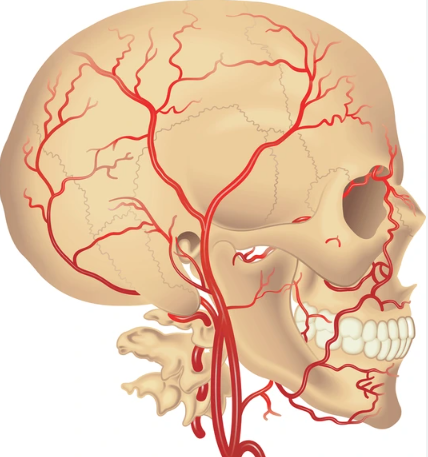
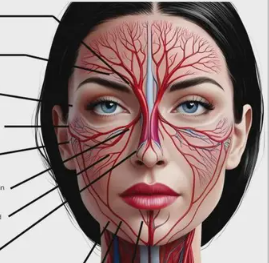
It could be that a conehead bulge, for example, puts strain on the thin blood vessels in that area. That is, they are stretched and compressed to the extent that blood flow to the area is severely reduced. Likewise, a giant bubble that can form on the front of a heads, as with Jason Statham, may be impacting the supraorbital arteries ability to deliver blood to the hairline, as it has to stretch over that skull bubble to push blood up there.
The skull growth in the areas of the forelock, crown, and forehead, as pictured above, likely put a severe strain on the arterial network that delivers blood to the hair in those areas, and result in very poor blood-flow.
LIFE-FORCE HYPOTHESIS
Poor blood-flow seems like a likely culprit, although it may be such that the lack of contour, itself, is the unique cause of hair loss. Consider the photo of the girl below:

This girl has the common forehead bulge characteristic, yet she does not have a male hair loss growth pattern. That is, the bulge does not appear to be negatively impacting the growth of her hair at the hairline. However, the girth of that bulge is no less severe than any man, or toddler, pictured with the most advanced hair loss patterns. Therefore, I would expect that her bulge would be stretching and compressing the supraorbital arteries in a way that inhibits blood flow to the hairline and, thus, impacting it's ability to grow. However, such is not the case.
The only difference seems to be that her forehead bulge is not obscuring the contours of the skull that border the forehead. Despite the bulge, there is not much lateral curvature or gradual rounding from the forehead to the top of her head. Rather, her skull contours remain sharp. There are distinct borders, with sharp angles, that separate the various parts of her head. This leads me to suspect that it is not so much blood-flow that is the problem, as much as the body's ability to distinguish between the forehead, where hair does not grow, and the top of the skull, where the hair does grow. Which body? Probably the Etheric Body, which leads me to believe that it is not so much a lack of blood-flow issue, as it is probably a lack of life-force flow issue. Or perhaps both.
No matter what the actual cause is, the fact of the matter is that the lack of skull contours demonstrably negatively impacts hair growth. Infants suffer from a lack of skull contours, adult men can suffer from a lack of skull contours, but no children beyond infancy have such skull features. So it must be so, that no man with MPB had such skull shapes as children. Rather, the expansion and contour erosion occurs gradually starting at puberty, and is 100% correlated with the progression of the hair loss thereafter. As for why this occurs, read the Alchemy of Male Pattern Baldness home page for a detailed explanation. The remainder of this section, rather, will be dedicated to skull remodelling techniques that apply forces in a way to flatten the skull back out.
BONE REMODELLING BASICS
Bone remodeling is the ancient practice of utilizing the dynamic nature of the skeleton in order to alter the shape of human bone over time. Bone is continuously breaking itself down (osteoclasts) and building itself back up (osteoblasts), such that we get a new skeleton every seven years (note: this aligns with childhood tooth events occurring around 7, 14, and 21 years old). While the skeleton is continually breaking itself down and building itself back up, it is also responding to external stimuli. This is what organisms do. New stimulus will cause the body to break down and re-build the bone to accommodate the stimulus is some way. A classic example of manipulation of this phenomenon, and with the skull in particular, is the traditional Mezo-American practice of elongating the skull to honor the Gods by placing binding apparatuses to guide the growth of the skull. The result was a grotesque deformation as shown below.
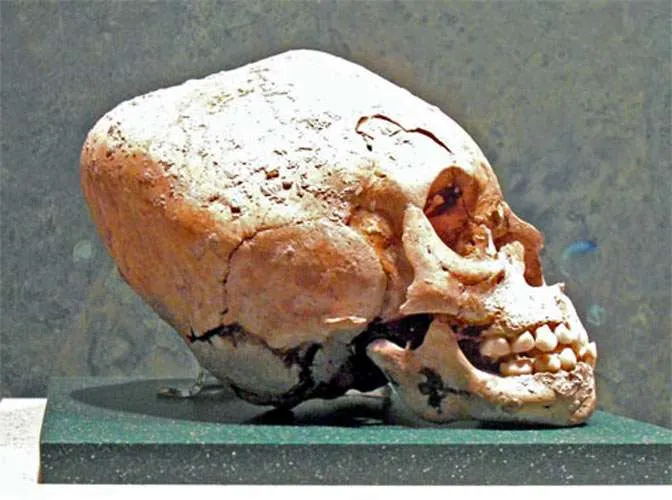
One such modern practice of bone remodelling is using orthodontic appliances to expand a narrow palate. When the palate is subjected to small, but constant, outward forces, then that stress will encourage the bone in the maxilla and mandible to resorb and grow outward over months and years. It takes a long time to change bone, and it must be subjected to constant force in order to effect such.
Presently, and historically, bone remodeling measures have only been applied children. The ancient Mezo-Americans started elongating their skulls in infancy; and today, it is generally accepted in the scientific community that bone remodeling cannot be accomplished in adults. Even in orthodontics, aside from surgical interventions and actually physically breaking the bone, it is controversial to claim to be able to expand an adult palate. Rather, the science dictates that an adult bone is set, and cannot be manipulated, unlike the malleable skeletons of growing children.
However, every MPB sufferer, and there are a lot of us, is glaring evidence to the contrary. We are walking and living proof bone remodeling is possible and does indeed continue into adulthood. Every one of us, whether we know it or not, has inadvertently subjected himself (or even herself) to adult onset skull remodeling. Our hair growth pattern has changed directly in proportion to when and how much the skull has remodeled, i.e. bulged out in various places, after puberty. This can occur deep into old age, and well after mature bone growth has been completed. If you're not convinced, then ask yourself if you have ever seen, or could even imagine, a 14-17 year old with a prominent point at the top of their head like this:
So, the question then is: if a bone can remodel to bulge out after puberty, then is it possible for it to remodel back to its original flat shape? My answer is: I don't know. But, this is what I've tried so far:
SKULL FLATTENING STRATEGIES
In this section I'm going to discuss all of the things that I have tried, and failed at, to remodel my skull. I have been experimenting with skull re-shaping since 2021. Nothing that I have done has worked. Part of the reason being is that I have changed my perspective on how and why the skull changes after puberty. I will briefly discuss this near the end of this section, when I describe my current technique. But, first, I think it is helpful to go through the evolution of my strategy, for learning purposes (i.e. learn from my mistakes).
• ALF APPLIANCE: The Advanced Light-wire Function (ALF) appliance is a holistic orthodontic apparatus that is aimed at widening the palate. It is a custom fit wire that attaches to the molars, sits behind the teeth, and has a spring action that is activated by tongue movement. This applies constant forces outward on palate, guided by natural tongue movement, in order to stimulate outward bone growth. It does not have any direct impact on the shape of other parts of the skull, like the forehead and crown. However, I mention here because my experience with it is somewhat applicable to our purposes.
I have been wearing this thing in my mouth since 2021, and it has definitely changed the shape of my palate. That is to say, in my experience, small and constant forces applied to an adult bone can change it's shape over time. This was, in part, my inspiration for my initial skull remodeling attempts that will be outlined next. I believed that if I could replicate this orthodontic strategy, with respect to my skull, then I could have the cure for hair loss. However, even though I can attest to small and constant forces over time will remodel the bones in the mouth, trying to apply this strategy to the other parts of the skull is impractical and problematic. It can even have the opposite effect, i.e. additional bone layering and more skull bulging.
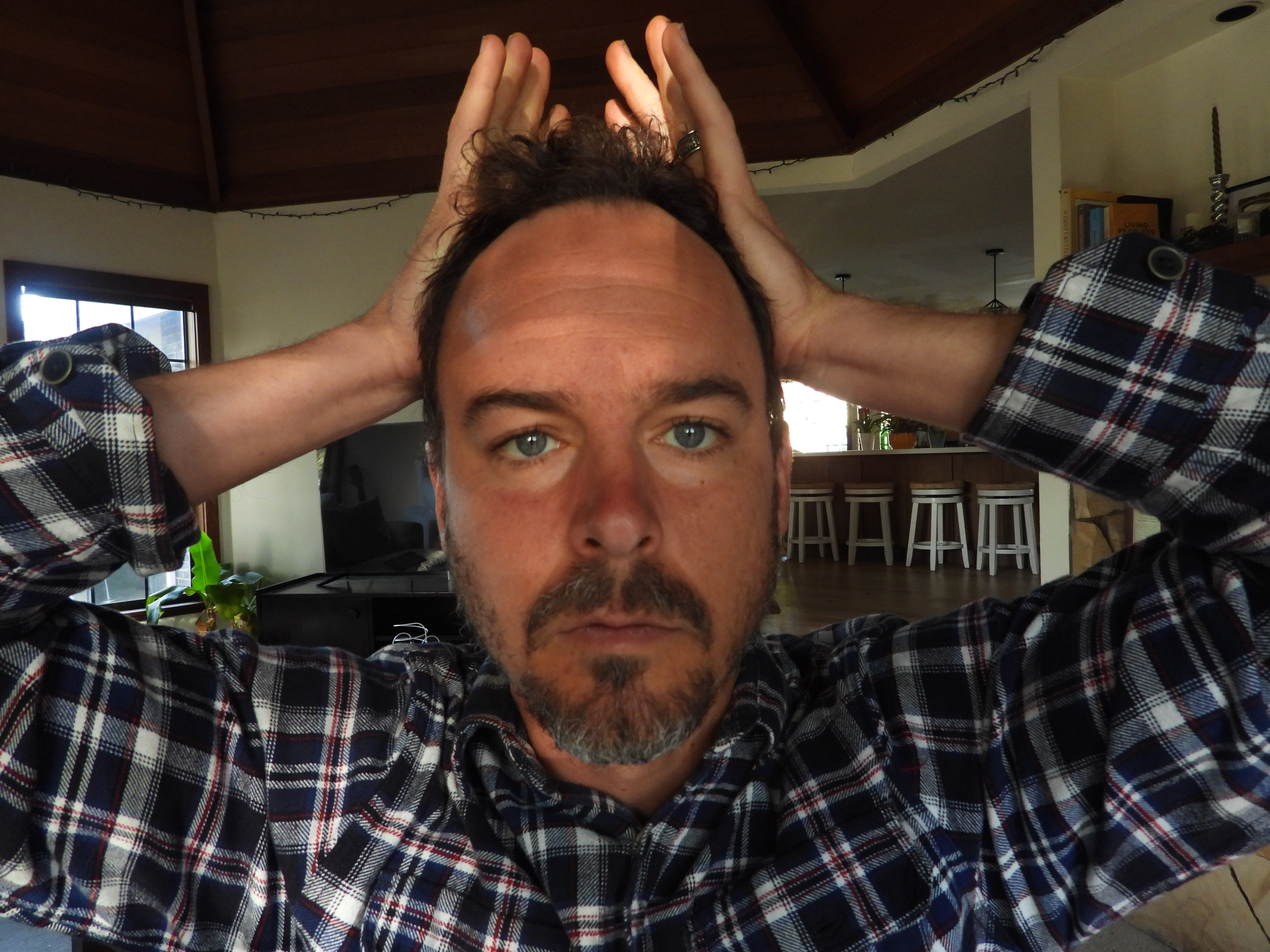
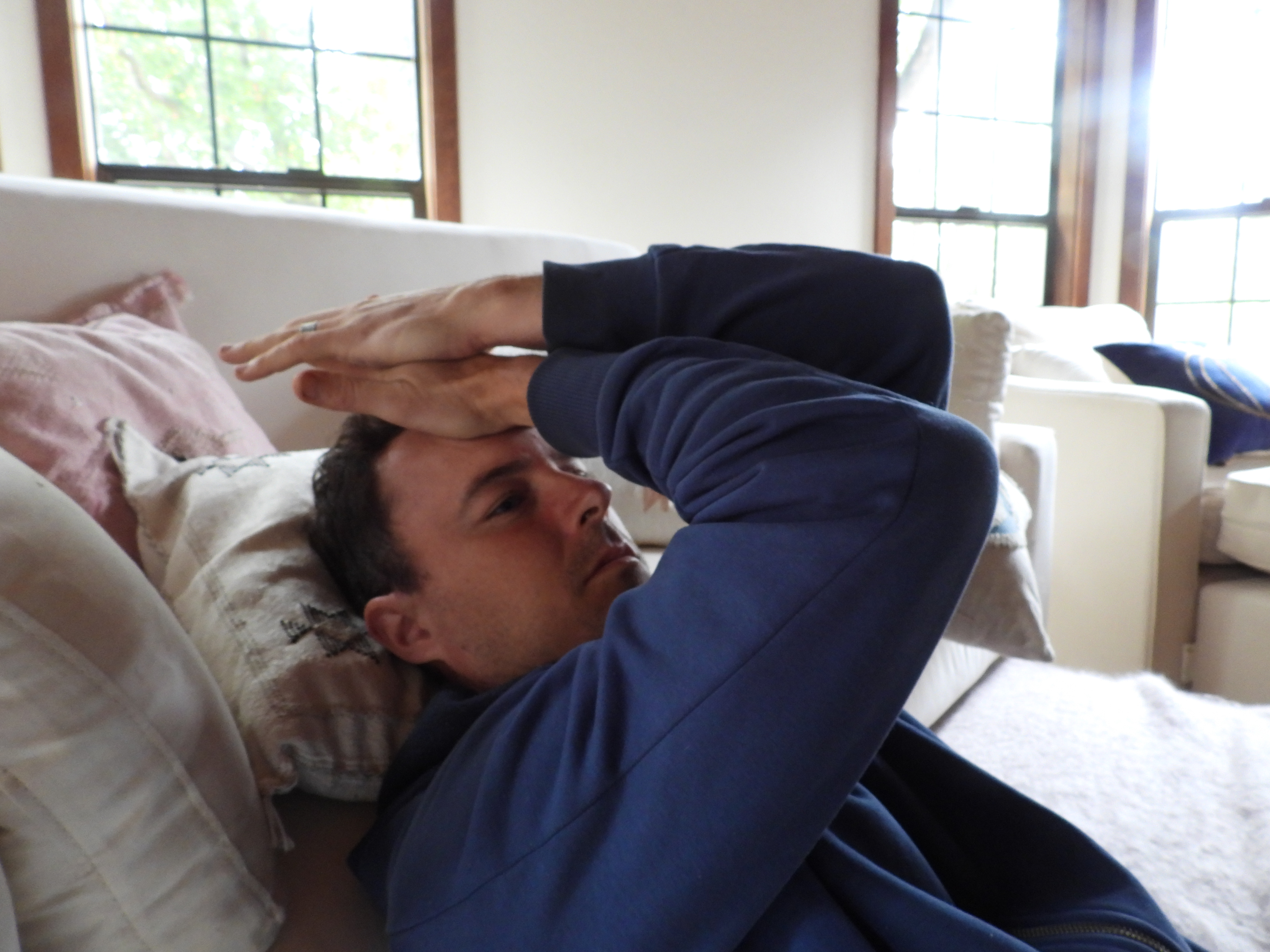
• PAUL TAYLOR EXERCISES: After having the ALF installed in 2021, I researched into Paul Taylor. I had read about him years before, but had dismissed the connection between skull shape and hair loss being a major factor. However, since I was now dabbling in skull remodeling, I was more intrigued, and open to the theory. Furthermore, my natural hair loss intervention strategies over the previous 2 years, i.e. paleo dieting and massages, were not getting the results that was expecting.
Paul Taylor has website and an E-Book, which outlines his theory on "Skull Expansion." In his $20 E-Book, he outlines his theory as to why the skull expands over time and how it is connected to pattern loss. In addition, he describes skull compression exercises to counteract the growth forces that he believes reshapes the skull. These exercises are composed of five manual compressions that are applied to different parts of the skull: down on the parietal bones, inward on the sides of the parietal bones, inward against the forehead, side to side against the forehead, and downward and back into receded temples. These are done three times per day, with massages in between, for a total of about 20 minutes of compressing (15 min) and massaging (5 min) per session.
MY ASSESSMENT: I did his exercises every day, as described, for 2.5 years. Then, for another 2.5 years afterwards, I did a more intense modified version of this. In 5 years of compressing my skull, it did not change. Not even a bit. Not even a budge. In fact, the bulges probably got worse, because so did my hairline.
I believe that his exercises and approach are ineffective because (1) 45 minutes of daily small and sustained forces is not constant enough to induce a change, and (2) I no longer believe, as he does, that the skull is remodeling simply as a response to outward skull collision growth forces over time. This, I believe, is ESSENTIAL to figuring out a solution to stop and possibly reverse it.
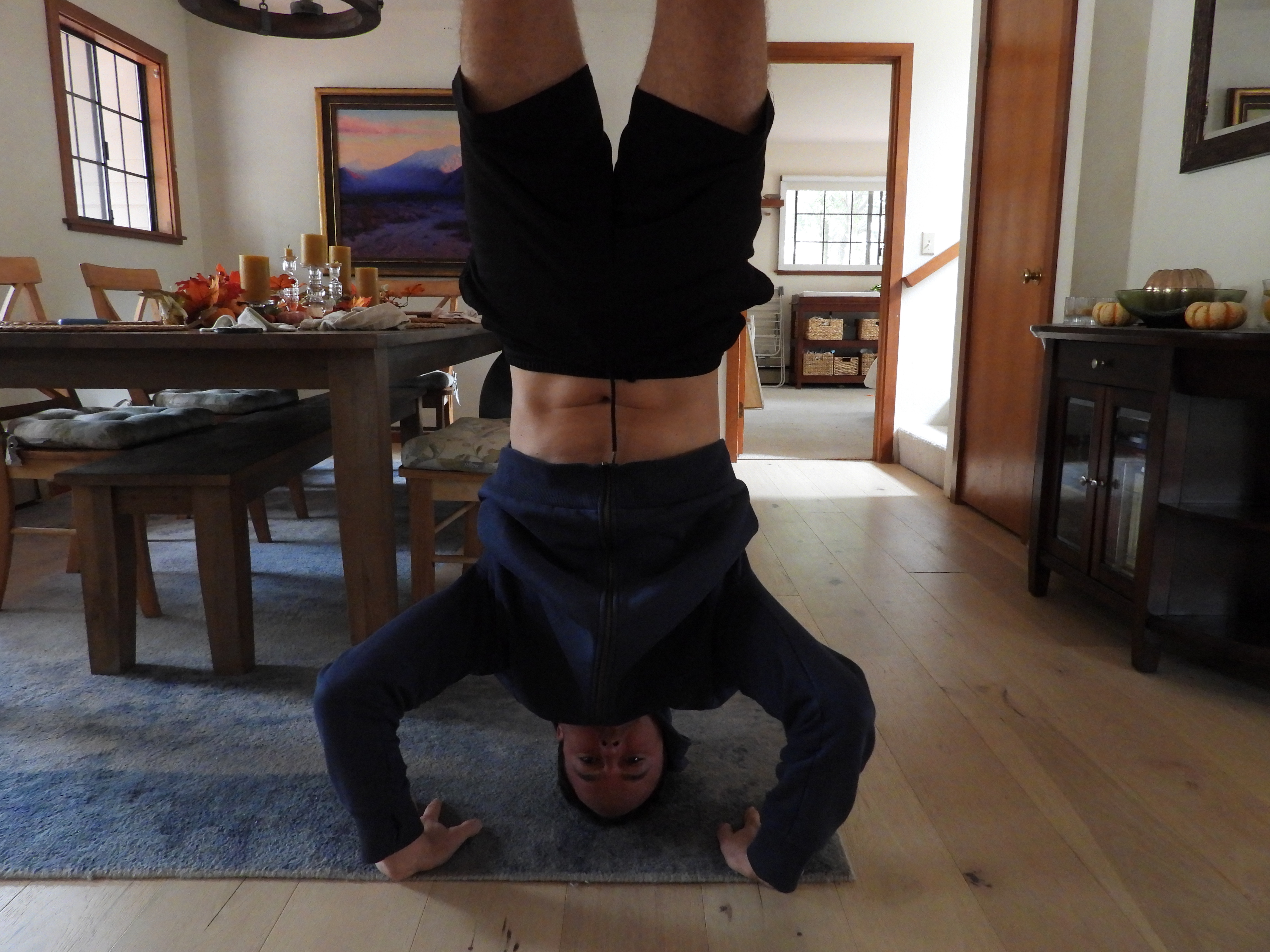
• HEADSTANDS: I have done daily headstands, in addition to the manual compressions, for the past 3-4 years (maybe more). I can usually hold them for 1-2 minutes. I did this in alignment with Paul Taylor's theory, i.e. that forces applied against an area of expansion will work to gradually flatten the bone. Though, he probably would not condone it because the force is high and the duration is too short.
MY ASSESSMENT: Headstands will not flatten the top of the skull. They cannot be held for long enough (i.e. all day) to have a such an effect. Furthermore, even if it could be held for many hours, the force applied is likely to cause more bone tissue to be added to reinforce the suturesm in order to protect the skull from cracking under the high mechanical load.
Although 1-2 minute headstands will not encourage bone resorption, it still may be a useful exercise. The reason being is that it is a manual way to balance the Yin and Yang in the body. Simply put, Yin energy settles and Yang energy rises. When you flip upside down, the Yin falls down toward the head, and the Yang rises towards the feet. That helps get the Yang energy out of skull (i.e the rising skull pushing force), while bringing in some nourishing Yin energy while you're at it. Just don't do it for too long, which will cause excess scalp Heat and, again, possibly encourage more bone growth to reinforce the structural integrity of the skull.
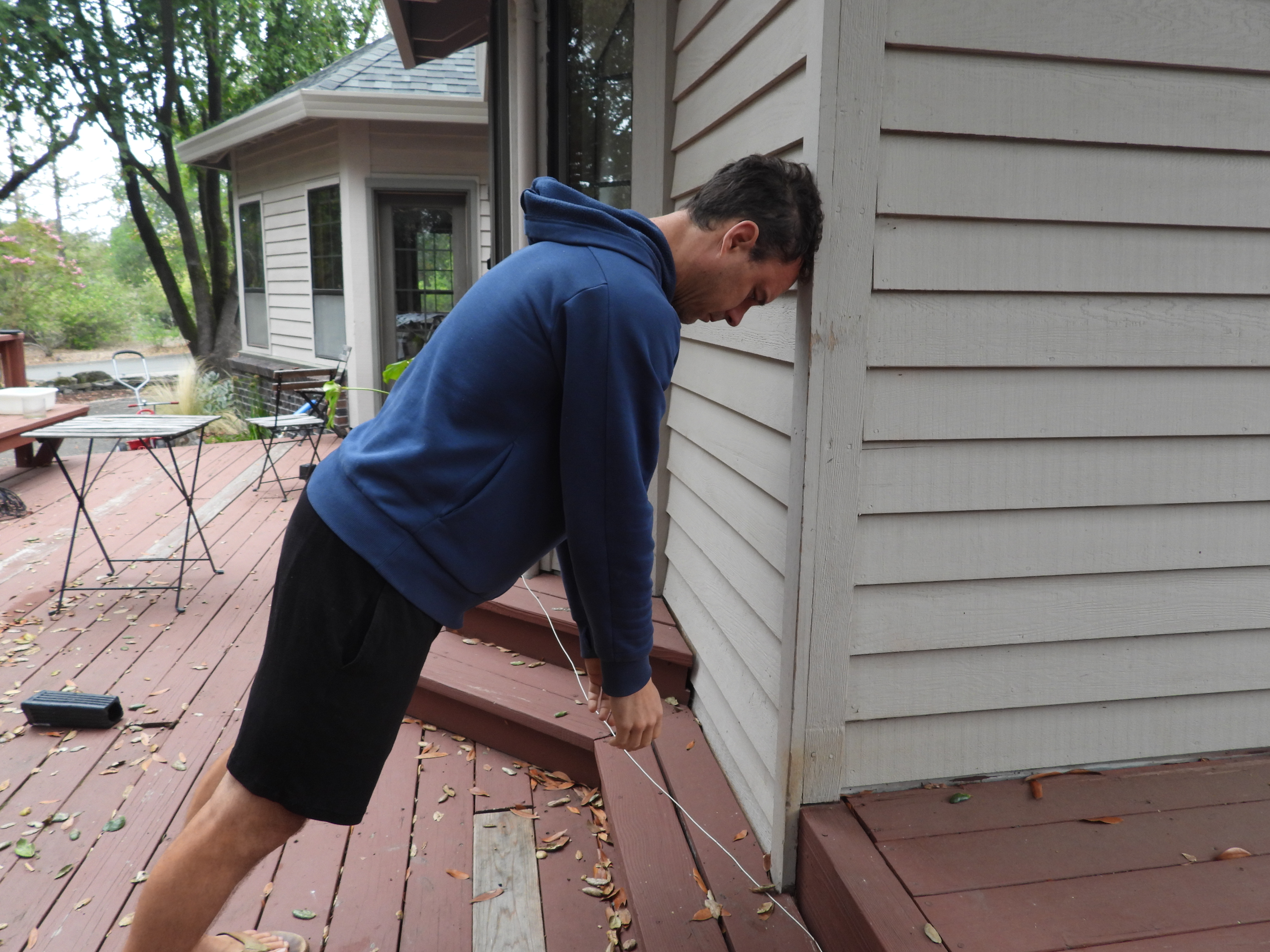
• HEAD-PRESSES: A head press is what I call leaning the head into a wall. It's a variation of headstands, which I have used to target my forehead and forelock area. The purpose is to apply a smaller, but substantial force, for several minutes at a time to an area in need of flattening. I would stand flat footed, and lean my weight into my head pushed against a wall with a towel, sandbag, or nothing in between.
MY ASSESSMENT: I tried this for about a year, around the time I started my YouTube channel. I made a few videos about it. I don't do them anymore. It has similar flaws to Paul Taylor exercises and Headstands. That is, it can't be done 24 hours per day, and the force is probably too much. All it did for me was put a dent in the skin of my forehead that would linger until I took a break for a few days.
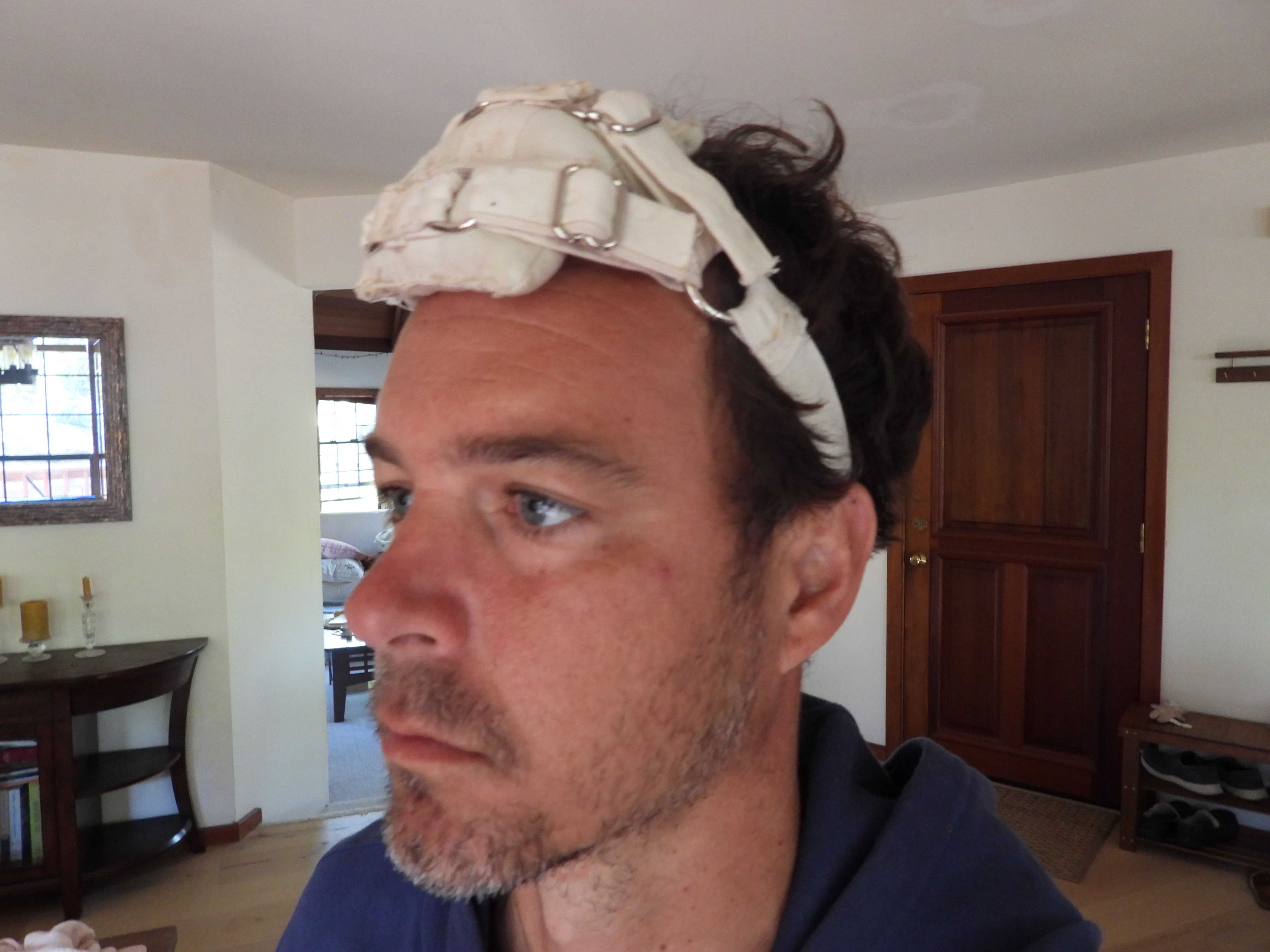
• SKULL WEIGHTS: These are light-weight (1-2 lbs) sandbags that I sewed and strapped to my head, to be worn all day, and while sleeping. This was my attempt to replicate the ALF remodeling success. It was a small force that could be applied for 8-24 hours at a time to the top of the head and the forehead.
MY ASSESSMENT: This is impractical. Hardly anyone has the day-to-day lifestyle that could justify wearing such ridiculous thing on their head. In addition, I wore this for about 3 months, and it created a thin patch in the center of my forelock. The hair has grown back since, although significantly blonder. My guess as to why this occurred is that the sandbag suffocated the skin, and suppressed the blood-flow to the Hair, which caused the hair to shed and to lose pigmentation.
Although the sleep weight that I made to sit only on the forehead at night does not impair blood flow to the scalp tissue, as much, it did noticeably disturb my sleep. I was not able to as sleep soundly through the night, while wearing it, without waking up. Nor was I able to keep the bag pressed against my forehead throughout the night without unconsciously rolling over on my side and losing the force of gravity.
Overall, the sleep weights are impractical and ineffective. It may even be counterproductive in that suffocation of the skin tissue will trigger a response in the sympathetic nervous system, which is the rhythmic system male pole that builds up bone in response to stress states (sclerosis).
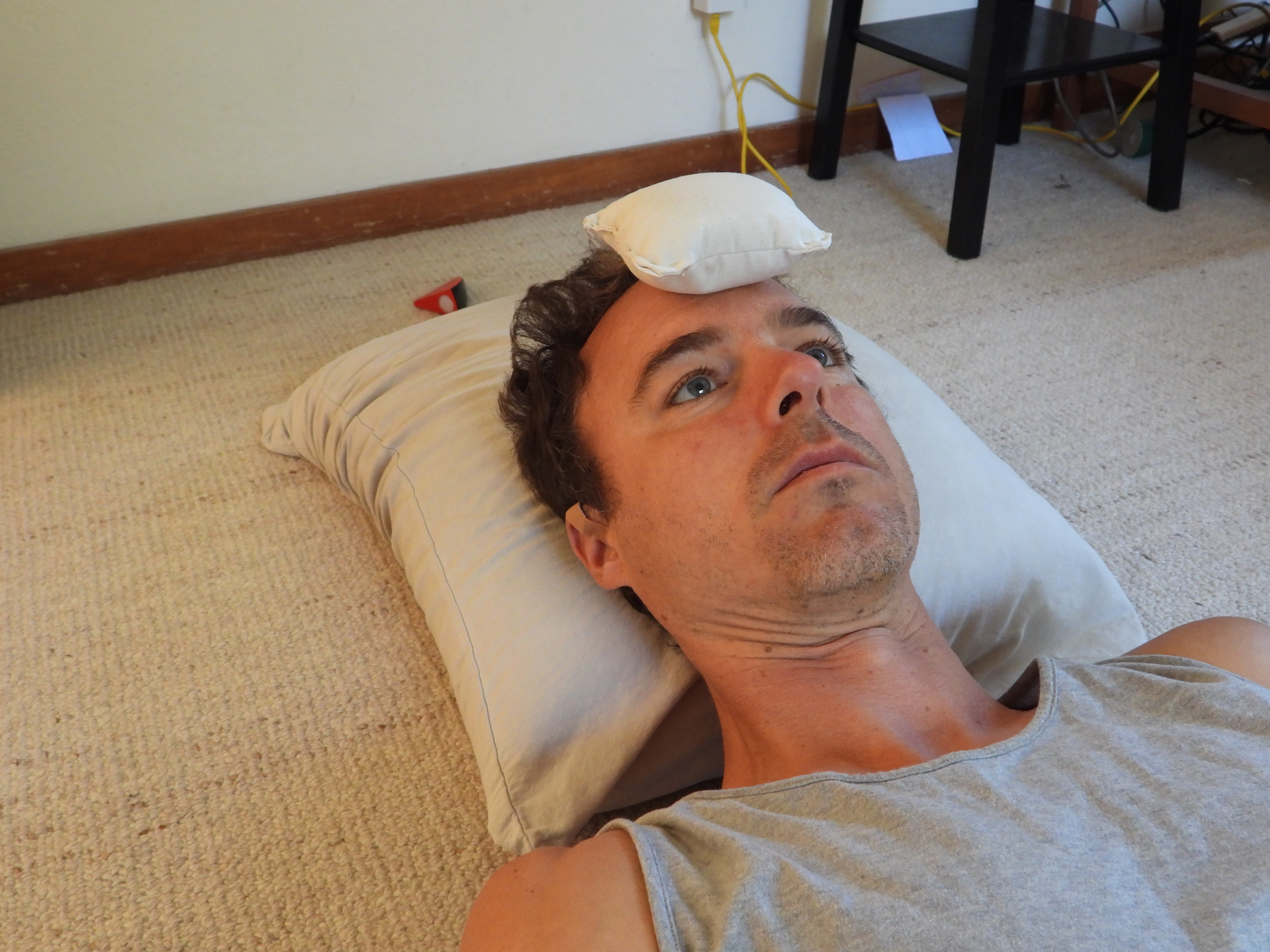
• 1 LB SANDBAG - 10 MINS/DAY: The idea here is to use the piezo-electric properties of the skeleton to stimulate a bone remodeling effect. I lay flat down on floor in corpse pose in order to put my body in a parasympathetic state, which is the female pole in the Paracelsus Dipole Model. This is the nervous system state that is responsible for the bone resorption function (inflammation), as opposed to the sympathetic state, or male pole, which is responsible for the bone building (sclerosis) function. Then, I place a 1 lb sand bag on the middle of the bulge on my forehead for exactly 10 minutes. The 1 lb bag is to keep the mechanical load on the sutures low enough so as to not trigger more bone tissue to be laid down, and the 10 minute cap is to prevent skin tissue suffocation from triggering a total body sympathetic nervous system response.
MY ASSESSMENT: There is no scientific justification for this. The force is too light and not sustained long enough in order to physically stimulate a bone remodeling response. A ten minute applied force is far from a constant force, and 1 lb will not even penetrate deep enough to the bone in order to activate the piezo-electric property of the skeleton, most likely. Nice try though!
KEY TAKEAWAYS
Overall, the problems with trying to apply bone remodeling strategies to the adult skull are that (1) any force that is strong enough to structurally impact bone is going to likely cause more bone tissue to laid down on the sutures, (2) any sustained forces applied to the skull will suffocate the tissue, impeding blood flow to the area and triggering a stress response in the sympathetic autonomic nervous system (end point: sclerosis), and (3) osteoclast (bone-removing cell) activity is actively triggered by tension forces, rather than compression forces, which would require a force to be applied inside of the skull, behind the bulge, which is dangerous/impractical.
Therefore, manual skull remodeling is a scientifically a "no-win" scenario. Rather, the only plausible option is cosmetic surgery, which actually can be done! There are cosmetic surgeons who do procedures to reshape the forehead bone. Of course, this is very expensive and even risky. But, it is an option.
I, for one, am not going to take the surgical option. While the risk of botching, financial restrictions, and even the gross aspect to this option are deterring, the biggest problem that I have with the surgical option is that we don't learn anything from it. If you read the home page, then you are aware that I believe that almost every disease (maybe all of them) is designed to teach us something. In this manner, disease has a purpose, a divine purpose even. It is informing us that we need to make a change, in order to get back on path.
If disease were just random, then there would be a cure sometimes and sometimes not. But, if I'm correct, if it does have a purpose, if it is the cosmic energy trying to get our attention and get us back on path, then all disease MUST have a solution. Also, like Captain Kirk in Wrath of Khan (1982), I don't believe in the "no win" scenario. Rather, I believe that every problem contains, within it, its own solution. I also believe, as the wise-man says: "the best way out, is the way you came in." All this is to say that there must be a non-surgical option. Furthermore, this option must pertain to resolving the underlying problem. That is, if a brute force is being applied outward is not encouraging the bone to grow, then it's not going to be the correct remedy either.
The non-surgical option, rather, must be rooted in resolving an imbalance. This imbalance, I believe, is in the Etheric and Astral (or emotional) bodies. Therefore, resolving the imbalance requires deep inner plane work, such as in the form of meditation, service work, lifestyle changes, and overall just learning what our unique life-path and taking steps in that direction. This is outlined in more detail on the home page, as well as the other pages.
In any case, it could be that once this imbalance is resolved, then the skull will just go back to flat on it's own, without any need for manual remodeling. If not, then if a manual intervention is needed to remove the bone, then I believe, it is going to require a finer touch. It may also very well take a dash of the metaphysical. Such may even require us to unlock a healing potential deep within us that defies logic and scientific explanation. But, that's expected. Because where the the limits of Material Science end, Alchemy begins. And that's where we can beat the "no win" scenario. Here is one such idea:
ENERGY WORK TECHNIQUE to REMODEL SKULL
Reconsider the last skull remodeling strategy with the 1lb sandbag for 10 minutes. On paper, this will not work. The force is too light, and the duration is too short to activate the piezoelectric skeleton magic. HOWEVER, instead of relying on the force of the sandbag weight to remove the bone, the idea is to use the power of intent, breath, and vibration.
One of the principles of TCM is that "Where the Mind goes, the Qi flows." In other words, we can direct the flow of the life-force energy with our thoughts. This is the principle on which I am basing the following exercise:
1. 2-3 minutes of practicing moving energy (Qi) through the body.
2. 2-3 minutes of breath-work to increase vibration.
3. Lay down in corpse pose with head propped up.
4. Vocally declare intent: e.g. "I am flattening my forehead."
5. Place sandbag weight directly on the bulging area.
6. Imagine the area where the weight is placed getting flatter for the ENTIRE 10 minutes.
7. Remove the bag and vocally declare: "My forehead is a little bit flatter now."
8. Savor how flat the forehead feels for 1-2 minutes.
The purpose of moving energy (Qi) through the body is to get a feel for the life-force, in order to manipulate it in more complex ways (e.g. healing, removing bone, etc.). It also increases our awareness, which up-regulates the subconscious (female) and down-regulates the conscious (male) functions of our Mind, respectively. The subconscious is what is responsible for healing. The simplest way to practice moving energy through the body, is to focus on a body part (like a finger) and try to mentally stimulate as much sensation as possible, and then start moving that sensation through the body. That's the Qi flowing, and it's quite enjoyable to do.
The purpose of the breath-work is invigorate the life-force flow. Breath is the foundation of the Etheric Body, as breath and Qi are nearly one in the same. A sheer increase in the volume of Air moving in and out of the lungs is all that is needed to augment the flow of Qi. Furthermore, conscious breathing in this manner raises the base vibration of the functions of our body, which creates a more "positive" energy field in which the Qi can flow. This can be done by anyone using any of the following breathing techniques and or a combination thereof: (1) deep in-breaths for a count of 2, and then out-breaths for a count of 6 through the nose, (2) deep in breaths for a counts of 1, and out-breaths for a count of 4 through the mouth and nose, (3) 5-7 quick and consecutive forceful in and out-breaths through the mouth and nose, or (4) steady rhythmic breathing synchronized with the imagination drawing a circle over and over. These are just examples.
Laying down in corpse pose helps us to get into a relaxed parasympathetic autonomic nervous system state. This helps to activate the "Metabolic System", or the female pole in Parcelsus's Dipole Model, which governs the bone resorption function. It also acts as a physical and mental tension relief posture, to help facilitate the flow of life-force. Tension impedes the life-force.
Declaring our intent directs the action of the flow Qi in the Etheric Body to do our bidding. Doing so audibly enhances this effect because it generates a more powerful frequency, to which the Etheric Body strongly responds. It responds to thoughts too, but not quite as strongly. This step is inspired by the principles of cymatics, which is that all matter is organized by frequencies. This aligns, biblically, with Genesis how God spoke things into existence during the creation event (e.g. God SAID "Let there be light"). That is, God's voice organized matter into existence. The idea is that we too can organize, or reorganize matter with our frequencies, as this is how this whole place was set up. The ancient alchemists who designed our language knew this. The different sounds and symbols that we use in our language work on us on a subconscious level to raise or lower our own vibration, depending on how we use it or who or what media we expose ourselves to. Anyway, in this exercise, we are harnessing the power of intention frequencies that our Etheric Body responds to, i.e. declarative statements, in order to reorganize our own matter in the Physical Body. So, before placing the sandbag on the skull, say (OUT LOUD) something to likes of "I am flattening my forehead" or "I am removing the excess bone on the bulge my forehead." Probably the more concise the better.
Placing the sandbag on the head does not act as a stimulation force in this exercise, but rather as a focal point for the Mind to direct the Qi. Visualizing and imagining the area where the force is applied being flattened, broadened, and/or having the excess bone tissue being removed, guides the life-force to do exactly that. What is visualized or imagined can vary (do whatever feels right), but the most important thing is to focus on this 100% of time during the 10 minutes. Furthermore, all this can, of course, be done without the weight. But, I think it helps those of us with less advanced mental capabilities to maximize our current consciousness capacity.
Finally, after removing the sandbag, declaring something to the effect of "My forehead is a little flatter now," and then following that up with interpreting the feeling of relief in that area as it having been flattened, and savoring it by imagining the bone actually being flatter, both help to lock in all of the energy work.
I cannot emphasize more that the mental/imaginative aspect to the exercise is the MOST important part. It WILL NOT work otherwise. It may not even work. But, this is the best idea I have, right now. And it's worth a try. It's just 10 minutes out of the day.
A note on the 1 lb sandbag: I am under the impression that a pound is a Sacred Geometry measurement. That is, there is something mathematically and mystically powerful about that measurement as it pertains to the divine creation. I don't know what it is exactly, or how it applies, but I don't recommend using the more progressive "Metric System" units of measurement. The difference is that the Metric System was designed for humans by humans, but the Imperial System was given to us by the Gods.
Optional 11th Step: Mix 1 part castor oil with 1 part sesame oil and massage it into the area being worked with exactly 36 clockwise circles. Castor oil delivers warming energy deep into the tissue, while cooling the external. The warming energy is what the body needs to dissolve the cold hard bone tissue. The 36 clockwise circles are a TCM technique to drive in energy into the body. Note that castor oil will not aggravate scalp heat, in excess, because it has a cooling effect on the surface tissue. The sesame oil is mixed in to assist with penetration, as it is a relatively light oil. It is also nourishing to the tissue.
Food Energetics (Diet)
"Food is Medicine" has become cliché in modern fad diet culture. Everyone from Carnivores to Vegans quotes Hippocrates, in this manner, because what he said is still true: "Let food be thy medicine, and medicine be thy food". However, I don't think Hippocrates was Keto, Paleo, Low FODMAP, High Protein, Low Histamine, or Gluten-free, nor would he likely subscribe to the popular modern progressive dietary laws of nutrient density, calorie intake, autophagy, macros, etc. that the proponents of these diets use to justify them. Instead, like all initiates into the various facets of ancient wisdom, he probably viewed food as medicine because food has non-caloric energy. This non-caloric energy is what can be used to address imbalances, which are the true cause of disease.
Food is more that just nutrients and calories. For example, a food can be warming, cooling, drying, damp forming, tonify Yin, tonify Yang, build Jing, build moisture, build Blood, disperse Blood, build Qi, disperse Qi, consolidate Qi, etc.. Understanding the energetic properties of a food are critical to disease recovery, so long as you understand the disease as well.
MPB, generically, is a disease caused by a male (yang) imbalance. That is, for whatever reason, and unique to the individual, the (male) Fire element has become exuberant relative to the (female) Water element in the individual, which is common for men, and has resulted in a disorder of the chronic male pole state variety (sclerosis). While diet is not the cause of, nor can entirely correct, the imbalance that is causing MPB, it can be used as a complementary therapy to mitigate the effects of the imbalance, while helping to not aggravating them, while doing the deep inner plane work in the Astral or Mental body where the imbalance actually lies.
TCM and Ayurveda are two ancient healing modalities whose wisdom in regards to the energetics of food have fortunately been preserved and are accessible. The dietary framework in this section is based on the healing principles and energetic properties of individual foods as described in both modalities, as directed towards correcting a general male imbalance. However, each of us is different, and we all require a slightly different rebalancing strategy. The following is only a guideline to aim us in the right direction:
TCM Guidelines
1. STRENGTHEN the SPLEEN
In TCM, the Spleen is the organ responsible for extracting nutritive Qi from our food, which is used to make our Blood, replenish our vital energy (Essence,) and to fuel our Physical Body. The Spleen, of course, is paired with its Yang organ counterpart, the Stomach, in order to properly perform this function. Although the Stomach works to break-down the food that we eat, it is the functional energy of the Spleen, or Spleen, Qi that is needed to perform the essential nutritive Qi extraction from this food. For this reason, tonifying Spleen Qi is the primary focus in strengthening the digestive function in TCM, and is determined by three factors: food choice, eating habits, and emotional state.
The Spleen likes foods that are classified as "sweet," in TCM. These types of foods are not necessarily desserts like cookies, cakes, and other processed treats. While foods like refined or unrefined sugar and honey are indeed "sweet," foods like potatoes, carrots, figs, avocados, beans, some leafy greens, and even beef are also considered to be "sweet" in flavor too. These are the substantiating foods that generally make up the bulk of the meal. By contrast, pungent spices and bitter herbs are used sparingly because, while they can spark the digestive fire, they are difficult for the Spleen to digest in excess. See the Ayurveda section for more information on spices.
The "sweet" foods that the Spleen likes the most are starchy grains, like rice and oats. White rice, in particular, is easy on the Spleen, and helps balance out the rest of the meal. In fact, the chinese character for "Qi" is basically a drawing of rice being cooked. The layered meaning is that rice tonifies Spleen Qi, which then can fill our body with Qi to give us life. It is likely for this bit of ancient wisdom why grains are often the largest portion of the meal in traditional Asian cuisine.
In addition to "sweet" foods, the Spleen likes foods that are warm, both thermally and energetically. Rarely in Asian culture, is a food or drink consumed cold. Frozen and even raw foods are difficult to digest, and will weaken Spleen Qi. Even frozen foods that are thawed and cooked have a cold energy that will weaken the Spleen. Rather, raw ingredients prepared as soups, porridges, congé, and teas are the most nourishing to the Spleen, and hence easiest to digest. Even foods that are energetically "cold," like bananas and persimmons, which will tax Spleen Qi when eaten raw, can be nourishing when cooked into porridge or stewed in some way. The long cooking process when moisture content is retained will help keep the Spleen healthy and strong.
Some foods inherently create "dampness" in the Spleen. This relates to the digestive fire, and thinking of the stomach as a large caldron that is stewing all of the eaten foods to break them down more before sending them through the rest of the digestive tract. "Damp" foods, like moisture in the air, weaken the digestive fire of the Stomach. This will put a strain on the Spleen, and lead to undigested food and inefficient nutritive Qi extraction, as well as other digestive problems. Some common foods that create dampness are dairy, wheat, and fat. These are not "bad" foods that must be avoided. Rather, their portion must be moderated in the meal to facilitate proper Spleen function, or paired with digestive spices to properly balance the meal.
Regular mealtimes are just as important for the Spleen as the food that the meals contain. The Spleen is represented by the Earth element, in TCM, because digestion gives us stability. Furthermore, digestion is strengthened by stability. So, it's a reciprocal relationship. The more stability that we provide the Spleen, the more stability it will provide to us. Therefore, eating breakfast, lunch, and dinner every day at nearly the same time is important for maintaining a strong Spleen. By contrast, skipping meals (e.g. intermittent fasting), snacking between meals, grazing throughout the day instead of eating fewer substantial meals, eating late at night, and eating at irregular times are ways to undermine Spleen function and destabilize our Earth element.
According to TCM, the best times for a meal are 7-9 AM (breakfast), 11 AM - 1 PM (Lunch), and 5 PM - 7PM (Dinner). Furthermore, the Spleen is weakest at night and strongest in the morning, and so the types of foods preferred by the Spleen in the evening are much "lighter" (e.g. white rice, mung dal, broth/soup, non-starchy vegetables) than during the day hours (e.g. meat, beans, dairy, eggs, potatoes, whole grains).
In addition to eating the "right" foods, and having three regular meals per day, the Spleen likes mindful eating, and mindful activity in general. Even if it's a "healthy" meal, and at an appropriate time, eating while driving, texting, watching TV, working, or even while angry, stressed, or otherwise not "being present" during a meal with your company will stress the Spleen and weaken its ability to digest even the most digestible foods.
Excess thinking and worry, in particular, are damaging to the Spleen, even at non-meal times. The Spleen houses an etheric spirit known as the Yi. The Yi represents our intent. It's job is take the heavenly inspiration from the Heart spirit, or Shen, and translate that Heavenly energy into our Earthly energy. Our Earth energy is the energy that we expend doing our daily activities. When our Earth energy has "intent", then our Yi and our Spleen is strengthened. Rather, when we just "go through the motions" while worrying, thinking about something else, or just dreaming about what we would really like to be doing, then that is not so great for our Spleen, Yi, and Earth element. Therefore, at meals, best practice is to taste and savor your food, and to talk to your friends and family without any mental distractions.
Summary: Emphasize cooked "sweet" foods (especially soup), grains, and starches, moderate fat, dairy, and raw foods (e.g. salads), and avoid frozen foods (e.g. smoothies, ice cream), while maintaining regular meal times, and being mentally present while eating.
2. TONIFY KIDNEY YIN and ESSENCE
The Kidneys represent the Water element in TCM, as they provide the ultimate source of nourishment for the body. While the Earth is the foundation, life would still not exist if it were not for an ample supply of Water. The Kidneys are like a deep reservoir from which all life draws up its vitality. They store what is called the Jing, or "Essence", which is the vital substance that rest of the body needs to build all of our tissue and fluids, as well as supply the foundational energy to perform all of our physiological functions, including Hair growth.
In TCM, it is said that "the Kidneys manifest in the Hair." The reason being is that functional energy of the Kidneys, or Kidney Qi, is the energy that drives the growth cycle of Hair. Furthermore, the Essence, which the Kidneys store, is what keeps the Hair rooted, colored, and healthy. Therefore, weak and run down Kidneys will show in the Hair as greying, shedding, and dry and brittle shafts. The Kidneys being our vitality organ is why the first signs of "aging" often first show in the Hair via loss of color, thinning, and overall luster.
Although pattern hair loss is not directly caused by Kidney problems, it does impact the Yin-Yang energy balance in the body, which can influence pattern loss. The Kidneys are the most Yin organ in the body, and Kidney Yin is the ultimate source of Yin. It is the energy of the Kidneys that stores the Essence, as well as the cooling, moistening, and nourishing fluid reserves that the rest of the body draws from. This serves to keep the Yang Fire element in check, which will otherwise rise to the skull and cause grotesque skull growth as well as other problems in that area. The most Yang organ network is the Heart, which will be discussed in the next section.
To support a robust Water element, and keep the rising Fire element in check, it is important to feed the body a steady supply of "Kidney foods." The Kidneys like foods that are "salty" in flavor (e.g. salt), deep blue or black in color (e.g. black beans), reproductive in nature (e.g. eggs), are a part of the body that Kidney organ network manages (e.g. marrow), or resemble a part of the body that the Kidney organ network manages (e.g. walnuts, kidney beans). These foods nourish Yin, help build Essence, and/or tonify Kidney Qi.
Kidney foods are unlike the starchy grains that the Spleen likes in liberal supplies. Rather, they are more difficult for the Spleen to digest, and should be eaten in smaller portions. Otherwise, the Spleen will be stressed, and will not be able to extract the constituents from the Essence building foods in order to help the Kidneys replenish the Essence. The only exception is Bone Broth. Bone broth is a Kidney nourishing food, as it contains marrow, and it is very easy for the Spleen-Stomach to break down, as it has been "pre-digested" through a low and slow cooking process. Bone broth soups can be eaten regularly and in moderate portions to support vitality for both the Spleen and Kidney. Other Kidney specific foods such as black beans, walnuts, fish eggs, oysters, beef kidney, royal jelly, salt, beef testicles, and seaweed should be eaten in small portions and/or once per week or so.
Summary: Kidney foods are vitality building foods. They are the "aphrodisiacs" or "super foods" of traditional peoples reserved mainly for pregnant or nursing women and children, because they help the Kidneys build Essence. These foods are potent, and will support robust health even in small quantities. Small and infrequent servings are optimal to tonify the Water element while supporting Spleen function.
3. BALANCE YIN and YANG FOODS
All foods have an inherent thermal property. They can be cold, cool, neutral, warm, or hot. This thermal property is independent of the temperature of the food, although the temperature of the food will alter the inherent temperature. For example, a persimmon is "cold" when raw, but becomes "neutral" to "warm" when cooked. In general, raw foods are colder than cooked foods, though some uncooked foods, like peppers, are warm or hot regardless of whether they are cooked or not.
Foods can also influence Qi, expel energetic pathogens (e.g. heat, dampness, dryness), and tonify Yin or Yang. Generally, cooler foods can tonify Yin (but not all), and warmer foods tonify Yang. Since MPB is a disease related to an imbalance in the Fire (Yang) element relative to the Water (Yang) element, then the temptation is to consume all "cold" and "cool" foods, and avoid "warm" and "hot" foods. The problem with that approach is that the Spleen prefers warm and cooked foods. Stressing the Spleen with all raw and "cool" or "cold" foods will deplete Spleen Qi, which will ultimately deplete Essence and the weaken Water element. Furthermore, eating all Yin foods at the exclusion of all other foods to correct Yin deficiency will weaken Yang, which will cause even more problems.
The best approach in correcting a Yin Deficiency, or augmenting the Water element with respect to the Fire element, rather, is to make sure that "warm" and "hot" Yang tonifying foods are balanced, and to a slight tilt, with "cool" and "cold" foods. To effectively do so, it is important to be mindful of "warm" and "hot" foods in the diet, especially during hot weather seasons. "Hot" foods like peppers, lamb and game meat, garlic, vinegar, sour foods like ferments, and various spices will generate significant heat in the body, and could aggravate Deficiency Heat, which is excess Heat in the body due weak Yin, or Water element. This will further stress the imbalance, and deplete vital energy.
However, not all "Hot" foods should be avoided. For example, ginger, fermented foods (e.g. sauerkraut), and black pepper are excellent digestive stimulants, and help the body process the foods at various stages along the digestive tract. Excluding them from meals would, therefore, be detrimental. Rather, spices and ferments should be used sparingly, and even strategically. For example, coriander is a neutral spice that can be used in larger amounts relative to other hotter spices to get the stimulatory effect without aggravating Heat. Furthermore, "warm" foods like beef and lamb kidney, marrow, walnuts, black beans, which are needed to tonify Kidney Yang and Essence, can be offset by including liberal amounts of cooling vegetables, like zucchini, in the meal. Grains are generally neutral, and so they can be eaten in moderate amounts as well, without aggravating the Yin-Yang balance.
Foods that are not easily balanced and have no energetic value that should be avoided are pure stimulants like alcohol, coffee, narcotics, etc.. These substances will generate too much Heat and directly deplete the Essence.
As mentioned earlier, cooking changes the thermal properties of food to make it warmer. Certain methods of cooking make foods warmer than others, which should be avoided. For example, deep-frying barbecuing, and roasting significantly warm food. Whereas, steaming only heats it mildly, and even lightly sautehéing, though more so. In general, the more moisture that the food retains in the cooking process the more of its thermal natural it retains. Therefore, soups and steaming are the best way to keep cooler foods cool, which helps balance the warming foods, while also making the food easier for the Spleen to digest via the cooking process. Furthermore, it prevents naturally warm foods from becoming too hot, and aggravating the Yin-Yang imbalance.
Summary: Include some cooling vegetables in every meal, such as like bok choy, zucchini, sweet potato, celery, chard, seaweed, and summer squash. Emphasize neutral foods such as grains, carrots, beets, cabbages, and potato. Moderate portions of, or strategically balance, warming foods like onions, leeks, winter squash, organ meats, and digestive spices. Avoid eating cold foods raw, even though the tonify Yin, as they will stress the Spleen.
4. NOURISH BLOOD
In TCM, it is said that "Hair is the surplus of Blood." This implies two critical connections between Hair and Blood: (1) Hair is Blood, but has otherwise been transformed; and (2) Hair is the last priority of our Blood supply. So, the amount of Hair that we can grow depends on the surplus of Blood that is available. No surplus means no Hair.
While I believe this principle to be true, I do not believe that MPB is caused by a lack of Blood. Blood deficiencies are not pattern specific, but rather apply to the whole Hair supply. For example, babies can often be diffusely bald at various stages of development, which is likely due to the Blood supply surplus being consumed by the physiological demands of rapid physical and cognitive growth. Pattern loss with healthy growing hair otherwise is not indicative of a Blood supply issue. HOWEVER, having a healthy Blood supply will reflect in the existing Hair, with respect to luster, length, and propensity to shed. Therefore, for the purposes of maintaining healthy Hair within the pattern loss borders to make it look as good as possible, regularly incorporating foods that Build Blood is a good practice. Furthermore, Blood nourishing foods are generally Yin or Essence nourishing foods as well, and will serve to balance out the Fire element, which burns up Blood.
Blood nourishing foods generally are the color of Blood or contain juice that has the color of Blood, such as beets, cherries red grapes, raisins, pomegranates, beef, mulberries, and goji berries. Leafy greens, such as chard, kale, and spinach, also nourish the Blood, as the Heart generally likes green (or at least the Heart Chakra) and green leafy vegetables. Other foods that nourish Blood include oats, sweet potato, avocado, shiitake mushrooms, kombu, barley, chicken, duck, oyster, cheese, and milk (white blood). In addition, many herbs, such as nettle leaf and angelica root, are effective Blood supplements. More on herbs on the Etheric Body page.
In addition to eating Blood nourishing foods, avoiding Blood consuming habits like going to bed late, over-exercising, engaging in too much analytical thinking, or otherwise physically and mentally taxing behaviors is best kept in moderation, and balanced with daily time devoted to recovery activities like Yoga, Qigong, evening strolls, meditation, and sleep.
Summary: Incorporate some amount of Blood nourishing foods, such leafy greens, oats, beef, oysters raisins, beets, mushrooms, and/or sweet potato, regularly into the diet, and be mindful of over-exertion, both physically and mentally.
Ayurveda Guidelines
1. KINDLE the DIGESTIVE FIRE (AGNI)
According to Ayurveda, digestive strength is what provides vital essence (ojas), preserves the life-breath (prana), and produces the luster of good health in the body. Central to the digestive process, is the strength of the Digestive Fire, or Agni, of which there are several, but the main one is in the stomach. It is said that an individual who is endowed with good Agni lives a long life and has excellent health. Furthermore, when the Agni is extinguished, then death soon follows.
Maintaining or kindling strong Agni serves as the basis for all healthy physiological processes, which include growing Hair. While there are many people in modern living with weak Agni and straight hairlines, weak Agni can exacerbate the imbalance and/or indirect factors that are causing MPB. For example, weak digestion leads to poorly digested food, which create toxins, or ama in the metabolic pathways of the body. This ama will lead to nutrient deficiencies and friction-related Heat, which will block the flow of prana, both of which Hair is sensitive to. Furthermore, aggravations in this respect generally impact the head area because (1) Heat rises, and (2) digestion is governed by the Pitta dosha, whose seat is at the crown of the head.
There are several ways to help kindle the Agni, and much of which is similar to TCM. For example, cold food and drink weaken Agni, and so eating warm and cooked food is optimal. Furthermore, the use of digestive spices is heavily emphasized in Ayurveda. Black pepper, ginger, cinnamon, hing (asafoetida) and cumin, to name a few, are staples in Ayurveda cooking. Spices add more than flavor, and are not to be feared for their "anti-nutrients," but rather are critical for food break-down and assimilation throughout the digestive process.
In addition aiding digestion, spices can be altered to accommodate constitutional imbalances and the weather. For example, coriander seed is a rare digestive spice that has a "cooling" effect in the body. Therefore, it is suitable for constitutions that are vulnerable to aggravated Pitta-Fire, which generally apply to MPB sufferers. It is also suitable for most constitutions in the warmer Summer months. By contrast, warming spices like cinnamon help keep our bodies and digestion warm during the Winter months, and on cold mornings throughout the year.
In addition to spicing food, including all flavors is necessary for proper digestion. The reason being is that each organ involved in digestion is stimulated by a particular flavor. For example, in TCM, the Spleen likes "sweet" foods, but the small intestine likes "bitter" foods. So, sweet foods help the Spleen break down food in the stomach, and bitter foods help the small intestine separate the clear from the turbid food matter in that part of the digestive tract. And in Ayurveda, salty helps the gallbladder with bile production, and astringent helps the colon turn waste into solid matter. Therefore, we can support all of our digestive organs by eating a variety of foods and flavors.
In TCM, there are five flavors (sweet, sour, salty, bitter, and pungent), and in Ayurveda there are six (sweet, sour, salty, bitter, pungent, and astringent). Most of the normal foods that we like and eat are sweet, such as meat, milk, eggs, seeds, nuts, grains, and most fruits and vegetables. Sour is satisfied by including fermented foods, or a squeeze of lime. Salty is satisfied by adding salt to a meal. Pungent and stringent is satisfied by with most spices, and even some vegetables. The only particularly difficult food taste to incorporate is "bitter," which includes foods like turmeric, kale, asparagus, eggplant burdock, and turnip. The easiest one is to grate some turmeric to spice the meal. Otherwise, reference a TCM or Ayurveda eating guide, such as "Helping Ourselves: A Guide to Traditional Chinese Food Energetics" or "Ayurveda Cooking for Self-Healing". Such references also describe in detail the impact of the food on Qi, Blood, and energetic pathogens to assist in correcting imbalances and deficiencies.
In general, it is best not to overload the digestive system with a particular flavor. For example, fermented foods should be condiment-sized portions, salt and spices should be included but light, and don't eat a whole plate of bitter herbs. Even with sweet foods, it is best not to eat liberal amounts of very sweet foods, like sugar and raisins, because it will actually damage the digestive organ that it supports in large amounts. Such is the nature of life. There is such a thing as too much of a good thing.
Two other easy ways to improve digestion, in both TCM and Ayurveda, is to (1) soak beans and grains for 12-24 hours before cooking, and (2) drink digestive teas with meals. Grains and beans are better digested after being soaked. All that is needed is them to be gently rinsed, soaked in water, and then drained. Beans, in addition, should be washed after drained. The only exceptions are white rice and mung dal, which can be soaked for 30 minutes to 2 hours. White rice, in particular, does not need to be soaked. However, soaking will accelerate the cooking process. In regards to Teas, then can be made by steeping herbs and spices in water that has been brought to a boil. Common combinations that I am aware of are Ginger-Cinnamon-Cardamom (breakfast), Cumin-Coriander-Fennel (lunch), and Cinnamon-Chamomile-Fennel (dinner).
Meal timing is also important in Ayurveda. Similar to TCM, Agni needs three meals per day to stay strong. Skipping breakfast, for example, will weaken Agni for the remainder of the day. While TCM recommends that the "heaviest" meal be eaten at breakfast, when Stomach Qi is at its peak, Ayurveda recommends that the most substantial meal be eaten at Lunch (10 AM to 2 PM), when the Pitta dosha is at its peak. Pitta is the dosha that regulates digestion and the Fire element, hence its influence on Agni. Heavy foods include meat, eggs, dairy, beans (except mung dal), mushrooms, whole grains, and sweet potatoes. These foods require peak Agni strength to be properly digested, which is mainly available at the Lunch meal.
According to Ayurveda, breakfast Agni is fairly strong, and may be able to handles some heavy foods. TCM would disagree, and strongly advocate for heavy foods. However, both agree that Agni is too weak at dinner for such foods, and are best avoided then. Rather, dinners should consist of white rice, mung dal, steamed vegetables, and some ghee or sesame oil, as well as eaten before 7 PM. In addition, snacking weakens Agni for the upcoming meal, and should be avoided.
Summary: Cook with spices, incorporate all 5 (or 6) flavors into each meal, soak beans and grains overnight (except white rice and mung dal), drink digestive teas, and continue to eat 3 meals per day, at regular periods, and with appropriate "lightness" to the meal based on the time of day.
2. PACIFY PITTA-FIRE
In Vedic Philosophy, the five elements (Earth, Water, Fire, Air, Ether) reconfigure into 3 base energy patters (Vata, Pitta, Kapha), which are called doshas. These energy patterns govern our bodies, the energy of the time of day, and basically all of nature.
Pitta is the dosha that combines the Water and Fire element, with specific emphasis on governing the Fire element. This is the element that, when out of balance with the more feminine Water element, will rise to the head and cause heat-related problems, including Hair loss, according to Ayurveda.
Generally, hot, spicy, and pungent foods will "aggravate" the Pitta dosha, which will cause heat-related problems. However, not all "warm" foods are aggravating, nor is avoiding all Pitta aggravating spices or vegetables necessary or optimal, as these foods tend to aid in kindling Agni. The key is to moderate Pitta-aggravating foods and balance them with Pitta-pacifying foods. In some cases, however, such as when Heat symptoms are present in the head, it may be necessary to exclude Pitta-aggravating foods temporarily.
In general, Pitta-pacifying foods tend to be cooling and sweet, whereas Pitta-aggravating foods tend to be sour, warming, and/or pungent. However, there are "warm" foods that pacify Pitta. It's complicated. Therefore, using a guide, such as Ayurveda Cooking for Self-Healing, is best to learn how to balance each meal for each individual's particular tastes, constitution, and climate. Some general food guidance is provided below:
Pitta-Aggravating Foods: berries, grapefruit, lemon, kiwi, pineapple, plums, beets, burdock, chillies, eggplant, spinach, tomato, corn, millet, rye, soy sauce, overly-fermented dairy, eggs, most meat, most nuts, and most spices.
Warming Pitta-Pacifying Foods: brussels sprouts, carrot, leek, onions (cooked), mushrooms, winter squash, kidney beans, aduki beans, cheese, white chicken, and egg whites.
Cooling Pitta-Pacifying Foods zucchini, sweet potato, raisins, oats, milk, avocado, ghee, soft cheese, fresh yogurt, coconut oil, olive oil, mung beans, rice, lime, dates, and figs.
3. GROUND VATA-AIR
The Vata dosha is a combination of Air and Ether (Space). This dosha governs the more immaterial things in life: thought, energy, sound, and, especially, movement. Kapha is Earth and Water, which governs more of the material things, i.e. bones, tissues, fluids, etc.. Vata and Kapha balance each other, as where Kapha is heavy, dense, and slow, Vata is light, fast, and expansive. In regards to diet, the lightness of Vata foods helps keep everything moving through the digestive tract, whereas Kapha foods are densely nutritious. Both are needed for healthy digestion.
While imbalances in either dosha are never ideal, Vata has the potential to do more damage with respect to Hair. The reason being is that Vata governs the nervous system, and fight or flight response. When aggravated, chronic nervous energy can disturb Pitta-Fire, just as fast moving Air fans the flames of Fire, and aggravate scalp Heat. Furthermore, Vata imbalances permeate every aspect of our organism, including the Hair. Too much Vata movement energy will manifest in the Hair as shedding and dryness. By contrast, the "grounding" Earth energy of Kapha will give the hair stability, strength, and restore its nourishing oils. Therefore, having a dietary approach with a slight emphasis on Kapha-aggravating foods, and minimizing vata-aggravating foods and eating habits, could serve to minimize shedding, improve the health of the hair, and help counteract the energetic imbalance causing pattern loss, depending on our constitution.
Vata is aggravated by too dry or light foods, such as potatoes, some beans most cruciferous vegetables, and dried out foods like granola. Vata is also aggravated by irregular meal times, skipping meals, and eating too light at breakfast and lunch when Agni is strongest. The reason being is that under-eating creates "emptiness", which corresponds to the Ether element in Vata. Kapha foods, on the other hand, are oily and much more substantiating, such as meat, eggs, dairy, sweet potatoes, and animal fats. Such foods, however, when eaten in excess, especially at dinner, will overburden Agni and cause problems. Therefore, balance and timing is key.
You'll too notice that some foods that are in the "good" category in the last sections, are to be avoided in this or subsequent sections. That's because there is no perfect diet. Some foods are good sometimes, and bad other times. It depends on various factors. I try to not stress about it, but I still do. Still, I try to remember that there are no rules. Rather, there are only principles.
Vata-Aggravating Foods: broccoli, brussels sprouts, burdock, cabbage, cauliflower, kale, white potatoes, winter squash, tomatoes, black beans, aduki beans, kidney beans, barley, buckwheat, corn, millet, rye, spelt.
Grounding Kapha Foods: summer squash, sweet potatoes, avocado, walnuts, sesame seeds, olive oil, beef, sugar, butter, and cow's milk.
4. AVOID TOXIC FOOD COMBINATIONS
WEBSITE UNDER CONSTRUCTION. CHECK BACK IN SOON...
Read below for entertainment purposes:
Seasonal Eating
Ultimately, we don't have a nutritional problem. We have an overall energy problem, which is manifesting as a physical body problem. While not being disciplined with diet can cause problems, so can being too disciplined. Remember that near the root of MPB is a male imbalance that is further fueled by routine and drudgery. So, be careful to not let diet suck the fun out of eating. We need "soul" food too.
Soul food is exactly what it is, food that nourishes our soul. Our soul cannot be nourished by vitamin B6 and manganese. It needs the warmth from nostalgia, passion, and enjoyment. This doesn't mean going to Taco Bell and getting a churro. Rather, we need to cook food that reminds us of good times in the past, or that we like to eat, with high quality ingredients, that we make from scratch. The intimacy with the preparation of the food adds to the soul nourishing effect, in addition to giving us control over the toxicity of the ingredients, which, preferably, is none.
How much soul food do we need? I don't know. It's a balance. My inclination is to do more strict dieting in the Winter, whe vegetation is naturally scarce. If the Earth doesn't want to produce certain fruits and vegetables during this time in northern latitudes, then we probably not good for us to grow them in artificially conditioned environments in order to eat them year round, no matter how much of a "super food" they are touted to be. That's misguided bio-hacking. Furthermore, as I mentioned, the energy of the Winter is austerity. It's sobering. There's nothing sobering about tacos, pizza, and birthday cake. Save that for the Summer, minus the birthday cake probably. Carnivore diet fits with the austerity of Winter. It's the best time to be strict and to focus on healing and rebuilding our strength. In this manner, it will nourish us an energetic level along with the cleansing effects.
Overall, seasonal eating is probably the best practice. It's good for our internal rhythm to synchronize with nature in this way, and the foods of the season contain natural energies that we need. In fact, violating seasonal eating could create energetic confusion. Winter squash has the energy that we need in Autumn, but not in the Spring. Fruit is great in the Summer, but peaches and pineapples in January is going to confuse the hell out of the body. It's going to throw off our bio-rhythms. In addition, digestion is weakest in the Winter. The gut can't handle much raw plant food then. Save that soul food for the Summer through Christmas. In doing so, we'll be more in touch with the rhythms of the Earth and we'll probably appreciate the foods even more when we finally get to eat them at seasonal appropriate times, perhaps adding to the soul warming effect.
Finally, as a guy who has been very strict with his diet for about the last 7 years, I often think about this quote from a Chinese poet Bo Ju-yi commenting on all of the Daoist masters who were very conscious of herbs and extending longevity in his time: "Only I, who never followed a diet, have succeeded in reaching a ripe old age... I drink the wine in my cup and trust all else to Heaven's care." The guy only lived to 74 (772-846), but I still think it's valid advice about having faith and a relaxed spirit. However, bear in mind that, in the days of Bo Ju-yi, there was no Dunkin' Donuts. A steady diet of industrial seed oils, refined and glyphosate soaked grains, and high fructose corn syrup is going to kill you no matter how relaxed your spirit is. According to the Weston A. Price study, the minimal nutrition that a human needs to develop properly comes from high quality animal foods; in particular, the blood, milk, fat, and especially the organs. So I'll eat those foods, and foods of that nature, and trust the details beyond that to "Heaven's care".